
Loading dashboard
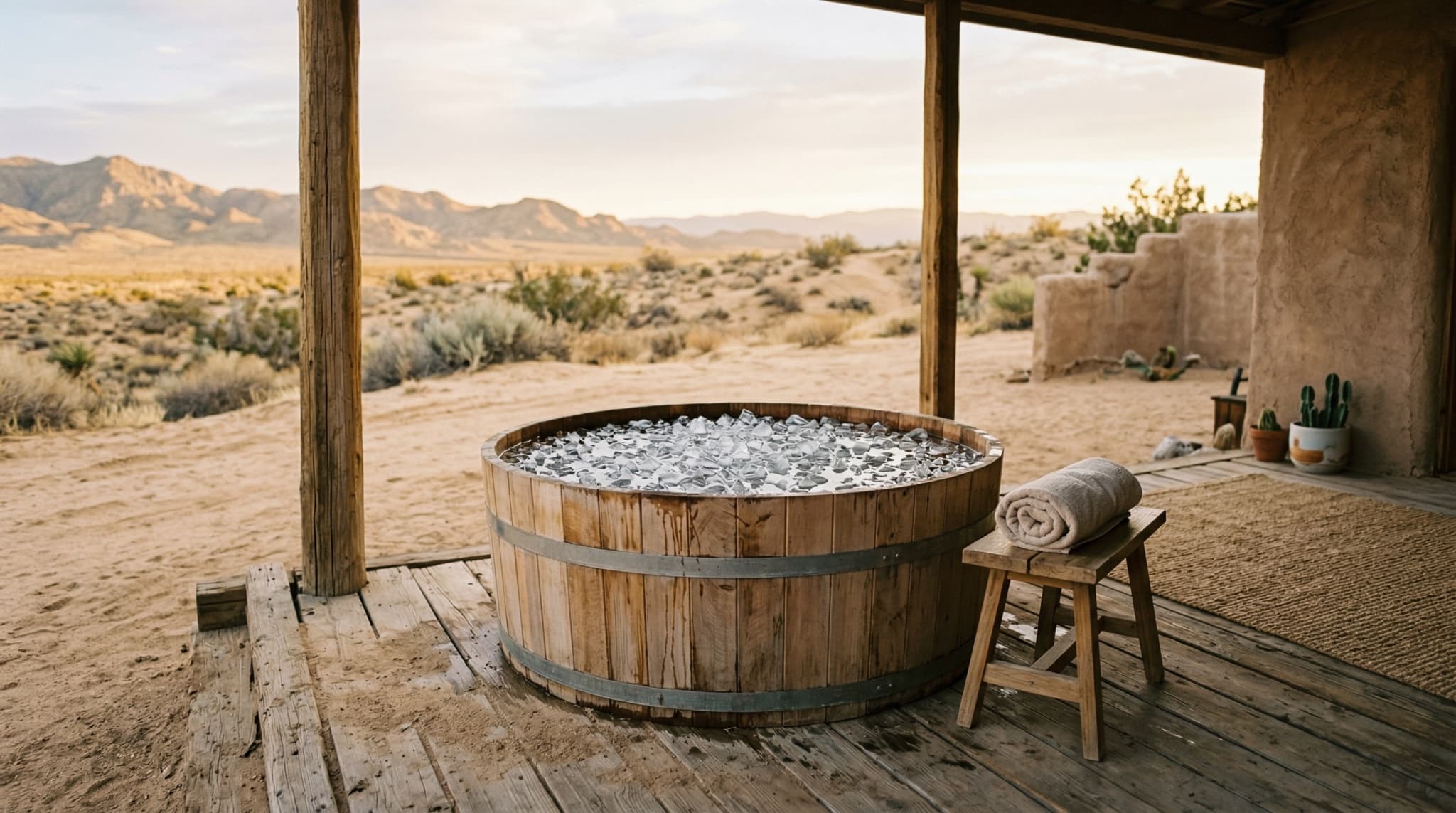
Brief head-out immersion in measured cold water, where sudden cold forces a noradrenaline surge and drives blood inward to defend core temperature.
A short, controlled, head-out cold-water immersion block may be worth testing for acute subjective mood and tolerance in screened adults, while monitoring safety, burden, and recovery context.
Cold Plunge has a plausible acute mood and tolerance use case, but the evidence base is early, mixed, and safety-boundary heavy. Treat this as a conservative personal experiment, not a broad health, immune, sleep, or performance prescription.
The strongest practical guidance comes from small acute studies, habituation and mechanistic studies, safety guidance, adjacent sports-recovery evidence, and public protocol context; durable health outcomes are not established.
Sources checked is every card shown on this page. Direct human participants counts only primary human studies with coded participant totals, deduplicated by cohort when possible. Review cards may show larger pooled head counts on their own rows, and those pooled totals are treated as approximate rather than added into the page-level number.
A controlled single-session immersion record reported immediate mood-score improvement in young, healthy participants; use this as a short-term subjective-mood signal, not a treatment claim.
1 source · 1 trial
A single 13.6 °C seawater immersion improved immediate mood scores in young healthy students.
A small crossover study reported mood improvement after both sea and laboratory immersion, while suggesting the setting can modify the psychological response.
1 source · 1 trial
Both sea and lab 5-minute CWI improved mood; sea setting was modestly stronger.
A duration-comparison trial reported acute mood improvement after 5-20 minutes of cool immersion, while also showing autonomic and safety-relevant shifts in a small subgroup.
1 source · 1 trial
A 2026 randomized duration trial found acute mood improvement after 5–20 minutes of 13.6 °C CWI.
A direct 10 C immersion study supports cautious acute stress and mood tracking, but its timing, cortisol, mood, and vascular signals were mixed.
1 source · 1 physiology study
Direct 10 °C CWI showed a delayed negative-mood/cortisol signal but mixed cardiovascular and mood endpoints.
Brain-connectivity and affect-measurement records can help choose endpoints, but the acute pre-post designs do not prove a durable cold-plunge benefit.
2 sources · 1 physiology study · 1 supporting source
Warmer head-out immersion increased positive affect and brain-network interaction, but only as mechanistic context.
Bio-protocol source supplies methods for CWI/fMRI affect measurement, not outcome evidence.
Clinical, supervised, open-water, and bundled mental-health records can inform endpoints and screening, but they do not show that a short controlled plunge treats mood disorders.
13 sources · 7 trials · 3 reviews · 2 observational studies
Mental-health review protocol defines planned endpoints but has no results.
WHM clinical RCT is promising mental-health context but cannot isolate cold exposure or cold plunge.
Adolescent outdoor CWI course reported short-term mood improvements, but with major population and design limits.
OUTSIDE protocol is useful for endpoints and safety screening but has no results.
CWI activity users report better mental-health and resilience correlates, but causality is not established.
Clinical review says CWI depression/anxiety evidence is early and methodologically limited.
Depression feasibility study supports supervised cold-water swimming context, not treatment claims.
Mindfulness+CWI pilot improved mood symptoms but did not isolate cold exposure.
Open-water swimming mental-health literature is supportive but heterogeneous and bundled.
Novice open-water swimming feasibility data suggests mood and wellbeing signals, but the exposure is not isolated cold plunge.
Sea-swimming feasibility data is promising for depression/anxiety symptoms but uncontrolled.
A single open-water swimming case reported depression improvement, but it is not direct cold-plunge efficacy evidence.
OUTSIDE feasibility RCT favored supervised outdoor swimming plus usual care, but it was not an isolated cold-plunge trial.
Broad reviews and mechanistic hypotheses are useful landscape evidence, but they mix modalities, small samples, timepoints, and outcomes; use them to constrain rather than expand protocol claims.
3 sources · 3 reviews
The 2025 review is useful landscape evidence, but findings are mixed and heterogeneous.
PGC-1α is a plausible CWI mechanism, but this review is hypothesis/context rather than direct protocol evidence.
Recent scoping review maps CWI wellbeing themes but does not establish direct protocol efficacy.
Habitual-use, winter-swimming, seasonal, and cross-sectional records are useful for hypotheses and confounders, not causal proof for a controlled cold-plunge block.
6 sources · 6 observational studies
Habitual winter-swimming associations are observational context only.
Cross-sectional plunging frequency showed an inverted U-shaped association, not causation.
Winter swimmers reported subjective benefits but structured measures showed no major group differences.
Winter swimmers reported improved wellbeing and mood domains after four months.
CWI and CWI-plus-breathwork users showed favorable mental-health/URTI associations, but the study is observational.
Seasonal winter-swimming biomarker changes were not cleanly separated from control-season effects.
Cold-shock and respiratory physiology sources support first-exposure breathing cautions, no forcing, and immediate exit if ventilation is not quickly controlled.
3 sources · 2 physiology studies · 1 review
Initial cold-shock responses can be hazardous even at 10 °C, and hyperventilation did not blunt them.
Respiratory cold shock is a core safety boundary for cold-water immersion.
Small pediatric data show acute cold-shock physiology without adverse events under supervision.
Cold-shock, hypothermia, sudden-death, and extreme-cold records anchor the main safety boundary; they are not benefit evidence.
8 sources · 5 physiology studies · 2 reviews · 1 observational study
Prolonged 14 °C cold-strain experiments are safety-boundary evidence, not routine plunge support.
Foundational CWI physiology source anchors the initial cold-shock response.
Sub-4°C immersion under very cold air conditions is an extreme-dose safety boundary.
Sub-4°C immersion produced acute haemorheological changes in healthy men.
Cold-water immersion can involve rapid fatal risk as well as unusual survival edge cases.
Float-first physiology supports early cold-shock and drowning-risk education.
Military ice-water self-rescue data show acute stress responses and measurement limits under extreme cold.
Broad cold-water immersion review anchors the cold-shock, drowning, cardiac, and hypothermia safety boundary.
Temperature, duration, and tissue-cooling studies help define dose measurement and thermal load, but cooling depth is not itself a wellness endpoint.
2 sources · 1 physiology study · 1 review
Tissue-temperature responses inform cooling-dose measurement, not benefit claims.
Colder, longer immersion increased physiological load and catecholamines.
Autonomic, endocrine, vascular, medication, and cardiovascular studies explain the acute load of cold exposure; use them for monitoring and caution, not benefit claims.
11 sources · 5 physiology studies · 4 reviews · 2 trials
Cold-exposure meta-analysis supports autonomic monitoring, not sleep/recovery efficacy claims.
Acute 14 °C immersion increased sympathetic activity, but repeated exposure did not clearly normalize responses.
Arctic-diving HRV data are safety/mechanism context, not cold-plunge efficacy evidence.
Partial-limb 8 °C immersion informs cardiovascular stress/CIVD, not whole-body plunge efficacy.
Very-cold-water diving HRV review is safety and measurement context only.
Acute CWI systematic review retained as mechanism context without extracted quantitative estimates.
Broad cold-water exposure commentary is useful for endpoint framing only.
Cool head-out immersion raised MCA velocity/MAP but did not clearly change hypercapnic cerebrovascular reactivity.
Acute cold stress increased sympathetic/cardiovascular markers in a small physiology study.
Beta-blockade can modify heart-rate response to cold exposure.
Sauna and ice-water sequences produced acute endocrine signals, but the exposure is an adjacent mixed-thermal variant.
Noradrenaline, lipid, and related biomarker responses are mechanistic dose context, not evidence that the protocol improves clinical outcomes.
2 sources · 1 physiology study · 1 trial
Noradrenaline/lipidome responses are mechanistic dose context, not clinical benefit evidence.
Short- and long-duration 14 °C CWI lipid kinetics were studied, but extracted effect details are incomplete.
Repeated exposure can reduce some cold-shock, ventilatory, anxiety, or perception responses, but habituation should not be converted into broad safety or efficacy claims.
12 sources · 10 physiology studies · 2 reviews
Brief repeated 15 °C exposures habituated some cold-shock responses.
Ventilatory and metabolic habituation require different cooling conditions.
Severe 20-day acclimation shifted cold-stress responses but is not a standard plunge dose.
Repeated immersion can habituate cold-shock physiology, but this is safety evidence rather than a benefit claim.
Acute anxiety can amplify cold-shock responses before and after habituation.
Perceptual familiarity may reduce anxiety without reliably blunting cold shock.
Repeated anxiety can inhibit cold-shock habituation.
Anxiety predicts cold-shock physiology before and after habituation.
Habitual winter swimmers showed hormone-pattern differences around a single CWI.
Initial cold-water response habituation appears mechanistically central rather than purely peripheral.
Human cold habituation can reduce cold-defense responses, but it is mechanism/ramping context rather than efficacy evidence.
Cold-shock habituation can persist, but it is not efficacy evidence.
Repeated brief 12 C head-out immersions habituated ventilation and perception but did not show broad cardiovascular, metabolic, core, or skin-temperature adaptation.
1 source · 1 physiology study
Six brief 12 °C immersions habituated ventilation/perception but not cardiovascular or metabolic responses.
Cold-stress, hand-test, balance, cognition, and measurement-method papers help choose logs and stop rules, but they are not direct outcome evidence.
4 sources · 2 physiology studies · 2 reviews
Very cold immersion can impair cognitive performance through cold stress rather than peak cold shock alone.
Sex and task context may modify autonomic and cognitive cold-exposure responses.
CWI balance/postural-control evidence is mixed and heterogeneous, with possible short-term instability after immersion.
Hand cold-water diagnostic tests are protocol-sensitive measurement contexts, not cold-plunge efficacy evidence.
Guideline, position-statement, and clinical explainer sources support screening, measured temperature, supervision, acclimatization, exit planning, and emergency planning.
5 sources · 3 guidance sources · 2 supporting sources
Cleveland Clinic provides public cold-plunge dose and risk framing, not efficacy evidence.
University of Utah Health supports safety-first cold-plunge framing and weak immune/CVD claim language.
Cold-exposure medical evaluation guidance supports screening before cold plunging.
Cold-water therapy safety guidance supports explicit risk minimization.
Professional CWI therapy position statement gives direct safety implementation guardrails.
Public cold-water, cardiopulmonary, and hot-cold contrast sources keep cold shock, incapacitation, respiratory risk, hypothermia, and rescue planning visible.
3 sources · 1 review · 1 guidance source · 1 supporting source
AHA News emphasizes cold-shock, heart-stress, drowning, and hypothermia risks rather than efficacy.
National Weather Service guidance makes cold shock a core safety boundary for any water-immersion protocol.
American Lung Association highlights cardiopulmonary and respiratory hazards, especially for hot-cold contrast.
Heart-disease, blood-pressure, long-QT, channelopathy, and supervised cardiac-immersion sources support clinician guidance before unsupervised cold-water exposure.
5 sources · 2 physiology studies · 2 observational studies · 1 review
Harvard Health frames cold plunges as weak-benefit and potentially risky for heart-risk groups.
Prolonged cold-water swimming event data provide adjacent QT/cardiac safety context.
Supervised sauna-plus-cold immersion cardiac study is boundary evidence, not general cold-plunge clearance.
LQT1 water-activity physiology is cardiac-risk screening context, not general cold-plunge safety proof.
Supervised cardiac-patient immersion/swimming found increased PVCs in heart-failure patients.
Cold-water, diving, face-immersion, and long-QT sources show how competing autonomic reflexes can raise arrhythmia risk, especially with submersion or susceptible users.
3 sources · 2 physiology studies · 1 review
Autonomic conflict is a mechanism-based arrhythmia safety boundary for cold-water exposure.
Autonomic conflict can worsen arrhythmia vulnerability in long-QT contexts.
Adolescent face immersion/body submersion data reinforce face-apnea and arrhythmia safety boundaries.
Cold-triggered urticaria and anaphylaxis sources support explicit screening because complete cold-water immersion can trigger systemic reactions in susceptible people.
5 sources · 2 reviews · 2 self-experiments · 1 observational study
Pediatric cold anaphylaxis literature supports strong cold-triggered reaction screening.
Current cold-urticaria review reinforces anaphylaxis screening boundaries.
Cold-induced urticaria cases support explicit screening before cold-water exposure.
Swimming-triggered cold anaphylaxis case reinforces cold-urticaria screening.
Large cold-urticaria cohort identifies complete cold-water immersion as an important systemic-reaction trigger.
Pregnancy and cold-stress sources are safety boundaries, not clearance for this ordinary unsupervised wellness protocol.
2 sources · 1 physiology study · 1 review
Pregnancy cold-stress physiology suggests a safety boundary, especially with preeclampsia.
Pregnancy-specific cold-water evidence is sparse and mostly consensus-based.
Alcohol changes thermal balance and early cold-water responses, supporting an alcohol and sedative exclusion for sessions.
2 sources · 1 physiology study · 1 trial
Alcohol/cold-water thermal-balance evidence is safety context only.
Alcohol changes early cold-water responses and remains a safety boundary.
Drowning, open-water, and submersion sources support first-session supervision, rescue planning, and urgent escalation after suspected submersion or aspiration.
8 sources · 5 reviews · 3 guidance sources
Whitewater cold-water fatality context is adjacent safety evidence only.
Drowning physiology review is context-only safety background.
Self-rescue swimming advice is adjacent safety context for accidental cold-water immersion.
Submersion-victim rescue guidance is emergency context for cold-water protocols.
Cold-water swimming risk/benefit review is adjacent context for plunges.
Swimming-related death mechanisms provide adjacent safety context, not cold-plunge efficacy evidence.
AHA drowning resuscitation update informs emergency-response planning only.
WMS drowning guidance supports rescue planning and submersion-risk boundaries.
Hypothermia, rescue, afterdrop, and rewarming guidance support post-exit observation and urgent escalation for confusion, non-responsiveness, inability to rewarm, or deterioration.
8 sources · 4 reviews · 3 guidance sources · 1 supporting source
Accidental hypothermia literature supplies safety boundaries, not wellness evidence.
Prehospital hypothermia guidance is a rewarming and escalation safety boundary.
Case evidence shows CWI can overcool even when used therapeutically.
Accidental hypothermia update supplies modern excessive-cooling safety context.
Cold-water rescue complications support post-exposure observation and emergency planning.
Cold-water survival guide clarifies staged hazards of accidental immersion.
Revised hypothermia staging supports responsiveness-based escalation.
WMS accidental hypothermia guidance defines emergency escalation boundaries for cold exposure.
Immune, inflammation, illness, cold-shower, clinical, and WHM-adjacent records are mixed or indirect and do not support an immune-protection promise for Cold Plunge.
13 sources · 5 trials · 5 reviews · 2 physiology studies
Severe 170-minute cold stress delayed cytokine responses during recovery.
Cold showers reduced sickness absence but did not clearly reduce illness days in a large pragmatic RCT.
Habitual cold-water swimmers did not show a clear URTI advantage in this 13-week observational study.
Cold-shower RCT reported immune-marker increases, but outcomes are biomarker-only and not cold-plunge-specific.
WHM review suggests inflammatory-response signals but cannot isolate cold plunge from breathing and commitment components.
A Wim Hof Method-style bundle attenuated endotoxin inflammation, but the effect is not cold-plunge-only evidence.
Voluntary cold-water health effects remain debated across heterogeneous evidence.
Repeated cold exposures showed catecholamine adaptation but no clear pro-inflammatory cytokine change.
Acute lymphocyte redistribution was strongest after partial body cryotherapy, not standard CWI.
Healthy-aging review provides broad cold-water therapy context, not protocol-specific cold-plunge proof.
Clinical gout RCT found pain and quality-of-life benefits, but the protocol and population differ from wellness cold plunge.
Human cold-exposure immune responses are context-dependent and do not supply direct cold-plunge efficacy evidence.
Older cold-exposure review is a cautionary mechanism source, not cold-plunge efficacy evidence.
Short whole-body CWI triggered stress hormones and mixed cytokine or white-blood-cell changes; use this as biomarker context, not immune benefit proof.
1 source · 1 physiology study
Short 14 °C whole-body CWI triggered stress hormones and mixed cytokine/WBC changes.
Repeated 7 C CWI had no clear relevant leukocyte effect and uncertain practical significance.
1 source · 1 trial
Three weeks of repeated 7 °C CWI had no clear relevant leukocyte effect and uncertain cardiovascular interpretation.
Repeated cold exposure shifted some immune markers, but clinical meaning and direct cold-plunge benefit relevance are limited.
1 source · 1 physiology study
Repeated cold exposure slightly shifted immune markers, but clinical meaning was unclear.
A small repeated therapeutic cooling or CWI study reported sleep and cognition signals but neutral wellbeing findings; use it as preliminary context only.
1 source · 1 supporting source
A small 4-week repeated-cooling study found sleep/cognition signals but neutral well-being findings.
Athlete and recovery studies make sleep, HRV, soreness, inflammation, and fatigue worth monitoring, but the evidence is adjacent and mixed rather than a direct wellness benefit.
14 sources · 7 trials · 3 reviews · 1 physiology study
Recent elite-sport review finds CWI sleep evidence mixed and limited.
Athlete sleep-intervention review finds limited CWI support and stronger evidence for naps/sleep extension.
CWI depth trial shows sleep-architecture signals but no clear recovery-marker advantage.
Evening post-exercise CWI did not show a clear whole-night sleep advantage.
Full heat-training trial found minimal/no sleep benefit from adding CWI.
Small swimmer study links daily CWI with HRV and subjective sleep-quality signals.
Cyclist crossover data show shorter sleep latency but no broad sleep-quality or quantity advantage.
Naturalistic sea-swimming diaries point toward mood and sleep signals, but not isolated plunge efficacy.
Heat-training abstract found sleep disruption and no significant sleep benefit from adding CWI.
Recovery-bundle data cannot isolate the cold-water component.
Repeated CWI attenuated muscle-damage markers but did not improve inflammation or function recovery.
Ironman CWI study did not support broad inflammatory-recovery claims.
Elite-soccer sleep/recovery review is contextual, not primary cold-plunge evidence.
Athlete sleep consensus supports measurement context, not cold-plunge efficacy.
Cold-shower, cold-air, cryotherapy, thermal sleep, and circadian records can inform what to monitor, but they are not direct Cold Plunge sleep-benefit proof.
5 sources · 3 trials · 2 reviews
Cold-exposure circadian review supplies mechanism context, not direct plunge proof.
Whole-body cryostimulation sleep signal is adjacent, not water-immersion evidence.
Partial-body cryostimulation reduced night movement but did not clearly improve subjective sleep.
Rugby thermal sleep study is adjacent and cannot support CWI-specific claims.
Cold-shower systematic review is adjacent and should not be conflated with plunge evidence.
Athlete and post-exercise CWI can help some soreness or selected recovery endpoints, includes null trials, and can conflict with strength or hypertrophy goals; it is a separate timing variant.
72 sources · 31 trials · 28 reviews · 9 physiology studies
Cochrane recovery evidence suggests soreness relief but with low-quality, heterogeneous trials and weak safety reporting.
Repeated short CWI habituated participants to cold exposure but did not improve hypoxic-exercise adaptation.
Post-lifting CWI is a muscle-growth boundary, not a simple recovery benefit.
Recent network evidence shows adjacent recovery signals but not a simple cold-plunge prescription.
A recent women-only RCT did not find faster recovery after CWI.
Post-exercise CWI adaptation effects are mode-dependent and should be periodized.
Placebo-controlled evidence warns that perceived CWI recovery may not exceed placebo.
Repeated post-exercise limb cooling may blunt training and vascular adaptation.
Regular local post-exercise cold may attenuate resistance-training adaptations.
CWI altered hemodynamics and temperature while helping maintain acute strength after resistance exercise.
Athlete-review dose guidance is useful but not universal.
Sprint-recovery CWI effects were dose-sensitive and mixed.
Resistance-exercise CWI helped submaximal function but not all performance endpoints.
CWI accelerated post-exercise HRV recovery, but the signal was short-lived.
Junior soccer CWI improved perceived fatigue/soreness but not objective recovery markers.
Short post-exercise CWI may accelerate HRV-based parasympathetic reactivation in cyclists.
CWI may enhance acute post-exercise HRV recovery relative to thermoneutral immersion.
Post-exercise CWI was reported to attenuate acute anabolic signalling and long-term muscle adaptations to strength training, making this a...
The meta-analysis reported lower delayed-onset muscle soreness at 24, 48, and 96 hours and lower perceived exertion at 24 hours, but no significant...
The available evidence suggested CWI was slightly better than passive recovery for soreness, with 11–15 °C and 11–15 minutes appearing most favorable...
Exercise increased inflammatory and cell-stress responses, but changes did not differ significantly between CWI and active recovery; CWI was no more...
The review reported preliminary evidence that post-exercise CWI may blunt resistance-exercise signalling and longer-term resistance adaptations, while...
The review found massage and cold exposure among stronger options for inflammation markers and recommended CWI and massage for perceptual recovery up...
The study reported that CWI attenuated anabolic signalling and skeletal muscle fiber hypertrophy, but did not attenuate strength gain.
The study reported that postexercise cooling impaired muscle protein synthesis rates in recreational athletes.
The review assessed regular CWI during training and is a central boundary source for possible mode-specific training-adaptation effects: concerns are...
The investigation suggested small negative effects of regular cooling on strength-training adaptations, including a statistically significant negative...
The review states that CWI can help some post-exercise recovery parameters but may attenuate physiological adaptations to resistance training in a...
The meta-analysis found that post-resistance-exercise CWI attenuated muscular strength gains in males overall, but the whole-body CWI subgroup did not...
The review concluded CWI was effective after high-intensity exercise, with positive outcomes for muscular power, muscle soreness, creatine kinase, and...
The updated review concluded CWI was better than control for muscle soreness, that water temperature and protocol did not drive the result, and that...
Older CWI recovery meta-analysis retained as adjacent synthesis.
Trained-athlete cooling meta-analysis is adjacent performance context.
DOMS dose RCT is relevant but result-limited in this extraction.
Older cold-application training source retained for lineage only.
Mayo Clinic Health System separates acute recovery claims from possible training-adaptation costs.
Cryotherapy recovery mechanisms are useful context, not efficacy proof.
Seated-versus-standing CWI source informs implementation variables.
Junior soccer running-performance source is adjacent and detail-limited in this extraction.
Collision-sport recovery source is adjacent and detail-limited.
Water-immersion physiology is mechanism context only.
IL-6 water-immersion pilot is heat-stress recovery context only.
Winter-swimmer cytokine data are observational adaptation context.
Cold-exposure immune physiology is not cold-plunge immune-benefit evidence.
All CWI groups showed earlier return to baseline for MeanRR, VLF, and LF; SDNN and SD2 returned earlier only in the 15 min at 14 °C group, which also...
CWI was reported beneficial for neuromuscular recovery at 24 hours after team sport and fatigue perception at 72 hours, but not for accumulated...
The trial compared 9 °C and 14 °C post-exercise CWI against control; extracted records indicate earlier soreness/recovery effects for some outcomes and...
The study suggested CWI may help recovery of stretch-shortening cycle performance, particularly with a 15 °C soreness signal, but did not clearly...
Dose-response findings were outcome-specific: 15 min at 14 °C was favorable for creatine kinase at 72 hours, 5 min at 14 °C for peak lactate and...
The accessible abstract-level record indicates CWI did not affect muscle-damage markers or CRP/IL-6 after the Ironman context.
No significant between-group differences were reported, but moderate effects suggested lower soreness and IL-6 and small-to-moderate...
CWI improved some 24-hour outcomes such as 10-m sprint and wellness ratings, including sleep quality, stress, perceived fatigue, and DOMS signals...
The study title and extracted records indicate CWI blunted and delayed increases in circulating testosterone and cytokines after resistance exercise.
The study examined molecular factors regulating growth and remodeling after resistance exercise and is interpreted as a mechanistic extension of the...
The title-level extracted record reports that water immersion methods did not alter muscle damage and inflammation biomarkers after high-intensity...
No significant between-group differences were observed for measured outcomes in accessible records, although small effects during weeks one and two and...
The study reported a limited effect of 3-minute CWI on inflammatory markers during post-exercise recovery; IL-6 was higher after CWI-rest than...
Adjacent mucosal-immunity source remains metadata-only.
Comparator-aware recovery synthesis supports mixed sports-recovery framing, not direct Cold Plunge efficacy.
Post-exercise CWI improved some fatigue markers but reduced immediate jump performance and did not confirm CRP/IL-6 effects.
Time-course meta-analysis shows later recovery benefits but early sprint/jump impairment.
SCI trial protocol provides endpoint context but no Cold Plunge outcome evidence.
Repeated CWI did not clearly improve performance or perceptive recovery in adolescent swimmers.
Repeated CWI shifted selected biomarkers in male rugby players but did not establish broad recovery efficacy.
Single post-eccentric-exercise CWI did not improve 72-hour performance recovery and acutely reduced jump performance.
HRV systematic review supports parasympathetic-reactivation measurement context after post-exercise CWI.
Dose network meta-analysis supports medium-duration CWI for acute EIMD soreness, jump, and CK recovery.
Body-region meta-analysis shows CK/DOMS reductions but no strength/power recovery and immediate CMJ inhibition.
Modality-specific network meta-analysis supports selected recovery uses but cautions against resistance-strength adaptation claims.
The review frames the primary human benefit of traditional cryotherapy as reduced pain after injury or soreness after exercise, while distinguishing...
The study evaluated different CWI temperatures for neuromotor performance after fatigue; extracted records support use as adjacent dose/temperature...
The study reported reduced stress and enhanced well-being in a bundled breathing/cold-water/meditation program, but the multicomponent design prevents...
Huberman, Mayo, Wim Hof, cold-shower, and other public protocol or explainer sources are useful for expectations and attribution, but they are not direct proof for this Murph protocol.
5 sources · 4 guidance sources · 1 review
Huberman Lab supplies widely cited dose language, but it is external protocol guidance rather than direct proof.
The Huberman podcast is useful for public protocol attribution, not direct Cold Plunge efficacy.
Mayo Clinic Press explicitly frames ice-bath benefits as thin evidence with important safety boundaries.
The Wim Hof cold-shower page is adjacent public-claims context, not Cold Plunge evidence.
The Wim Hof ice-bath page maps branded public claims and testimonials but cannot support efficacy.
Wim Hof-style and mindfulness-plus-cold studies bundle breathing, meditation, showers, swimming, coaching, or commitment with cold exposure, so they should not be cited as isolated cold-plunge proof.
5 sources · 4 trials · 1 guidance source
The Wim Hof FAQ is most useful as a breathwork-in-water safety boundary.
Resilience pilot RCT showed broad improvements across arms, not a clear cold-shower/WHM advantage in primary comparisons.
Stress benefit appeared in the combined breathing+cold arm, not clearly cold alone.
Large WHM-style trial found momentary state advantages but minimal/nuanced trait effects.
A 15-day WHM RCT did not confirm psychological or cardiovascular advantages.
Breath-hold, face-submersion, diving, and underwater-training sources support keeping the default Cold Plunge protocol head-out, with no hyperventilation, breath-holding, or underwater escalation.
5 sources · 3 physiology studies · 1 trial · 1 self-experiment
Older swimming/diving arrhythmia source is adjacent context only.
Underwater escape training ECG data support submersion and arrhythmia safety boundaries.
Cold-water submersion training case report describes atrial fibrillation requiring cardioversion.
Cold-water breath-hold experiments are safety-boundary evidence, not cold-plunge efficacy evidence.
Cold-water breath-hold submersion provoked bradycardia and ectopic arrhythmias in healthy subjects.