Eat Well During Pregnancy
Cover the key pregnancy nutrients with regular meals, a prenatal vitamin, safe food choices, and a flexible pattern when nausea or reflux hits.
 Ask Murph to help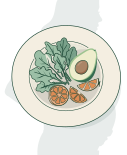
What to do
- Build simple meals. Combine a carbohydrate, a protein food, fruit or vegetables, and a fat or calcium-rich food: oatmeal with yogurt and fruit, rice with beans and vegetables, or eggs with toast and avocado.
- Take the recommended prenatal vitamin. Most people need folic acid before and during early pregnancy, plus the other nutrients it provides. Gummies may contain little or no iron. Don't double up or stack products without checking labels.
- Pay attention to iron, iodine, choline, calcium, vitamin D, and B12. Needs and sources differ, especially on vegetarian or vegan diets. A clinician or registered dietitian can find real gaps without a broad supplement stack.
- Include low-mercury seafood if you eat it. ACOG recommends two to three lower-mercury servings per week. Avoid high-mercury fish and follow current local food-safety guidance.
- Drink across the day. ACOG suggests roughly 8 to 12 cups of water daily in pregnancy; needs change with heat, activity, and illness. Consistently dark, infrequent urine can signal too little fluid.
- Adapt to nausea. Smaller, more frequent meals, something bland before getting out of bed, cold foods, and keeping large drinks away from meals may help. In a rough hour, the best food is often whatever you can keep down.
- Adapt to reflux. Eat smaller meals, stay upright after eating, and move the last large meal earlier. Cut a food only if it is a repeat trigger.
- Follow food-safety basics. Avoid unpasteurized dairy and juice, raw or undercooked eggs, meat, fish and shellfish, and heat deli meats as current guidance recommends. Wash produce and prevent cross-contamination.
A simple plan
For two weeks, choose three anchor meals and two backup snacks. Put the prenatal beside a meal you reliably tolerate. Include a protein food three times a day, fruit or vegetables several times, and one or more calcium-rich foods. Keep water within reach and carry a snack when a long gap is likely.
List the food-safety rules for foods you actually eat instead of memorizing every restriction. If nausea is prominent, aim for enough fluid, carbohydrate, and protein rather than variety, then widen the diet as symptoms ease. Ask for anti-nausea treatment early when it interferes with eating.
How to know it is working
If you get stuck
Lower the burden with frozen vegetables, canned beans, yogurt, eggs, microwave grains, nut butter, soup, or prepared foods that meet food-safety guidance. If the prenatal causes nausea, ask about timing or another formulation rather than quietly stopping it.
Restrictive eating, fasting, and aggressive weight-loss plans are generally a poor fit in pregnancy. Gestational diabetes does not mean cutting out carbohydrate; it calls for a structured, individualized eating and monitoring plan.