Improve My Balance
Build steadier standing and movement through progressively challenging balance, strength, and walking practice.
 Ask Murph to help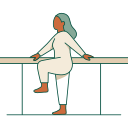
Balance improves when it is challenged safely and specifically. Feet-together standing, head movements, stepping in different directions, walking on varied surfaces, and recovering from small wobbles each train a different piece. Leg strength, vision, sensation in the feet, the inner ear, medications, and confidence shape the result too.
A good plan feels challenging without creating a real chance of falling. Practice beside a kitchen counter or heavy table. The support is there for safety; use it lightly enough that your balance system still has to work.
What to do
- Practice balance at least three days per week in short sessions.
- Progress from a wide stance to feet together, semi-tandem, tandem, and single-leg positions as appropriate.
- Add controlled head turns, reaching, stepping, and changes of direction.
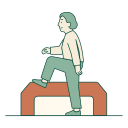
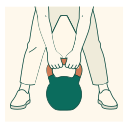
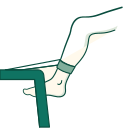
- Strengthen your legs with chair rises, step-ups, calf raises, and hip exercises.
- Walk regularly, and practice safely on the surfaces that matter in daily life.
- Review vision, footwear, medications, and dizziness when they are likely contributors.
Holding one pose forever does less than moving to a slightly harder task, but progress gradually. Closing your eyes, standing on unstable equipment, or balancing with no support nearby can sharply raise the risk and is rarely necessary in a home program.
A simple plan
Four days per week, stand beside a counter and practice three positions: feet together, semi-tandem, and tandem. Hold each for 20 to 30 seconds, twice per side, with fingertip support as needed. Then do ten controlled side steps in each direction and five slow step-overs of a low object while holding the counter.
Twice per week, add two sets of chair rises, step-ups, and calf raises. After two weeks, progress only the easiest balance position: reduce hand support, narrow the stance, add a gentle head turn, or reach toward a nearby target. Keep the harder positions supported.
Once a week, include a task that matters to you: walking a familiar uneven path with a companion, practicing turns in a hallway, or stepping on and off a curb with a rail nearby. Skill improves when practice looks like the environment.
Build recovery steps as well as quiet standing. With both hands near the counter, take a small step forward, sideways, and backward, returning to the start each time. Later, have a partner call out an unexpected direction while you keep the step small. Real balance often means recovering after movement, not avoiding it.
If fatigue makes your balance noticeably worse, do balance practice earlier in the session and strength work after. The safest time to learn is when attention and legs are fresh.
How to know it is working
Track stance, support, time, and errors such as stepping out or grabbing the counter. More time matters only until the hold is stable; then progress the task. Functional signs include smoother turns, more confidence on stairs, and fewer moments of catching yourself.
Every four weeks, use a standardized test such as a supported tandem hold or five chair rises. Don't do a risky test alone just for a score. Not falling matters, but falls are too rare and too dependent on exposure to be the only measure.
If you get stuck
If practice never gets easier, find what limits it. Leg weakness calls for more strength work. Dizziness or a spinning sensation may need vestibular or medical evaluation. Numb feet, poor vision, or a medication change need different solutions than another balance pose.
Fear after a fall can make the body stiff and cautious. Start with support, predictable tasks, and a trusted person nearby. Confidence should rise alongside capacity. For someone with repeated falls, a structured fall-prevention or physical therapy program can do more than self-directed drills.