Skip to content

Relieve Constipation

Improve bowel regularity with gradual fiber, fluid, movement, and a consistent bathroom routine.

Constipation can mean infrequent bowel movements, hard stool, straining, a feeling of incomplete emptying, or a big change from your normal pattern. The first-line approach is usually gradual fiber, enough fluid, movement, and a consistent chance to use the bathroom. More fiber isn't always the answer, especially if added too fast or when stool is blocked.

What to do

Build a bowel routine that works with your body:

  • Eat regular meals. The colon often gets more active after eating, especially breakfast.
  • Sit on the toilet for five to ten unhurried minutes after a meal, when the urge is likely. Don't strain for long.
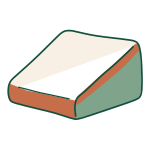
  • Use a footstool so your knees sit above your hips, if that's comfortable.
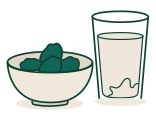
  • Raise fiber slowly through fruit, vegetables, oats, whole grains, beans, lentils, nuts, seeds, or a fiber supplement when appropriate.
  • Drink regularly. Extra water alone doesn't fix every case, but dehydration can worsen hard stool.
  • Walk or move daily.
  • Review medicines and supplements that can contribute, including opioids, some antacids, iron, anticholinergic medicines, and others.

Soluble fiber such as psyllium has evidence for chronic constipation, but take it with enough fluid and introduce it carefully.

A simple plan

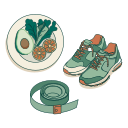
In the first week, set up a daily post-meal bathroom window, regular fluids, and a walk. Add one fiber-rich food each day instead of overhauling your diet.

In week two, add a second fiber source or consider a modest psyllium dose, following product instructions and clinical advice. Track stool form with the Bristol Stool Form Scale, plus ease of passage and frequency. Adjust every several days, not every few hours.

If stool stays hard or bowel movements stay difficult, an evidence-based over-the-counter osmotic laxative may be appropriate; ask a pharmacist or clinician which product and schedule fit you. Stimulant laxatives have a role too, but don't use them at random without understanding the plan.


How to know it is working

Success is comfortable, complete bowel movements without much straining, which doesn't have to mean one every day. Track days between bowel movements, stool form, straining, pain, and rescue medication. A trend over one or two weeks tells you more than one bad day.

What to expect

Routine, fluid, and movement can help within days. Fiber may take days to weeks and can raise gas at first. Chronic constipation can involve slow colon transit or pelvic-floor coordination, which may not respond to more fiber alone. Improvement may be partial until the specific cause is treated.

If you get stuck

If more fiber brings worse bloating and no easier stool, pause the increase and check whether stool is impacted or another treatment is needed. If you feel the urge but can't empty, pelvic-floor dysfunction is possible, and pelvic-floor biofeedback may help. If constipation started after a new medicine, contact the prescriber. Long-standing constipation that doesn't improve with a structured plan deserves clinical evaluation, not repeated cleanses.

A quick note

Don't use “detox” teas or repeated colon cleanses. They can cause diarrhea, electrolyte problems, and dependence on the ritual without fixing the cause. New constipation with blood, anemia, weight loss, severe pain, vomiting, or a strong family history of colorectal cancer needs prompt assessment.

Sources

  1. NIDDKNIDDK: Treatment for constipation
  2. PubMedAGA and ACG guideline: Pharmacological management of chronic idiopathic constipation
  3. NIDDKNIDDK: Eating, diet, and nutrition for constipation
View all 40

This guide is educational health information, not medical advice. It is not meant to diagnose, treat, or prevent any disease or condition, and it does not replace advice from your clinician. If you are or may be pregnant, nursing, have a history of an eating disorder, or have another medical condition, talk to your doctor before acting on it.

Created by Murph Health CommonsHow these guides are made