Return to Exercise Postpartum
Rebuild a postpartum exercise routine gradually through walking, pelvic-floor and core control, strength, and symptom-led progression.
 Ask Murph to help
What to do
- Start with ordinary function. Walking around the home, stairs, getting off the floor, carrying the baby, and basic self-care are the first load tests. Build these before a formal workout.
- Use symptoms as feedback. Increasing bleeding, pelvic heaviness, urine or stool leakage, pain, incision pulling, abdominal bulging, or symptoms still worse the next day mean the dose is too high or needs assessment.
- Reconnect breath, core, and pelvic floor. Practice quiet 360-degree breathing, a gentle pelvic-floor contraction on the exhale, and full relaxation on the inhale. Aim for coordination, not constant bracing.
- Build walking gradually. Start with five to ten minutes at an easy pace and add a few minutes after several comfortable sessions. Stroller walks and short indoor walks count.
- Reintroduce strength before demanding impact. Sit-to-stands, rows, wall or incline push-ups, light hinges, step-ups, and carries rebuild everyday capacity. Start with one or two sets; progress load or repetitions slowly.
- Leave room for recovery. Feeding, sleep loss, and caregiving change training tolerance. Two short sessions may beat one long one, and an easy week can be part of progression.
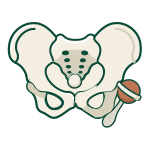
- Get pelvic-health help when useful. Leaking, heaviness, pain, a sense of vaginal bulging, difficulty emptying, or fear of loading are all reasons for pelvic-floor physical therapy.
- A six-week visit is information, not a magic switch. Medical clearance can rule out important problems, but readiness for a specific sport depends on healing, symptoms, strength, impact tolerance, and that sport's demands.
A simple plan
For the first two weeks, walk 5 to 15 minutes on four days and do two short sessions of sit-to-stands, band rows, incline push-ups, light hip hinges, and calf raises: one or two sets of 6 to 10 repetitions. Finish with energy left.
In weeks three and four, if symptoms stay stable during the session and the next day, add five minutes to two walks and a little load to two strength movements. In weeks five and six, add a third strength set or a low-impact interval such as one minute brisk, two minutes easy. Delay running and jumping until walking, strength, pelvic-floor function, and repeated small impact are all comfortable.
How to know it is working
If you get stuck
Reduce one variable: time, load, impact, or complexity. If a 30-minute walk causes heaviness, try three ten-minute walks. If squats hurt, use a higher chair. If fatigue is overwhelming, check sleep support, food, hydration, anemia, thyroid symptoms, mood, and complications before blaming motivation.
Don't judge readiness by how your abdomen looks. Diastasis, scars, pelvic-floor symptoms, and core strength are best judged by function and pressure control. A physical therapist can bridge from rehab to the sport or program you actually want.