
Loading dashboard
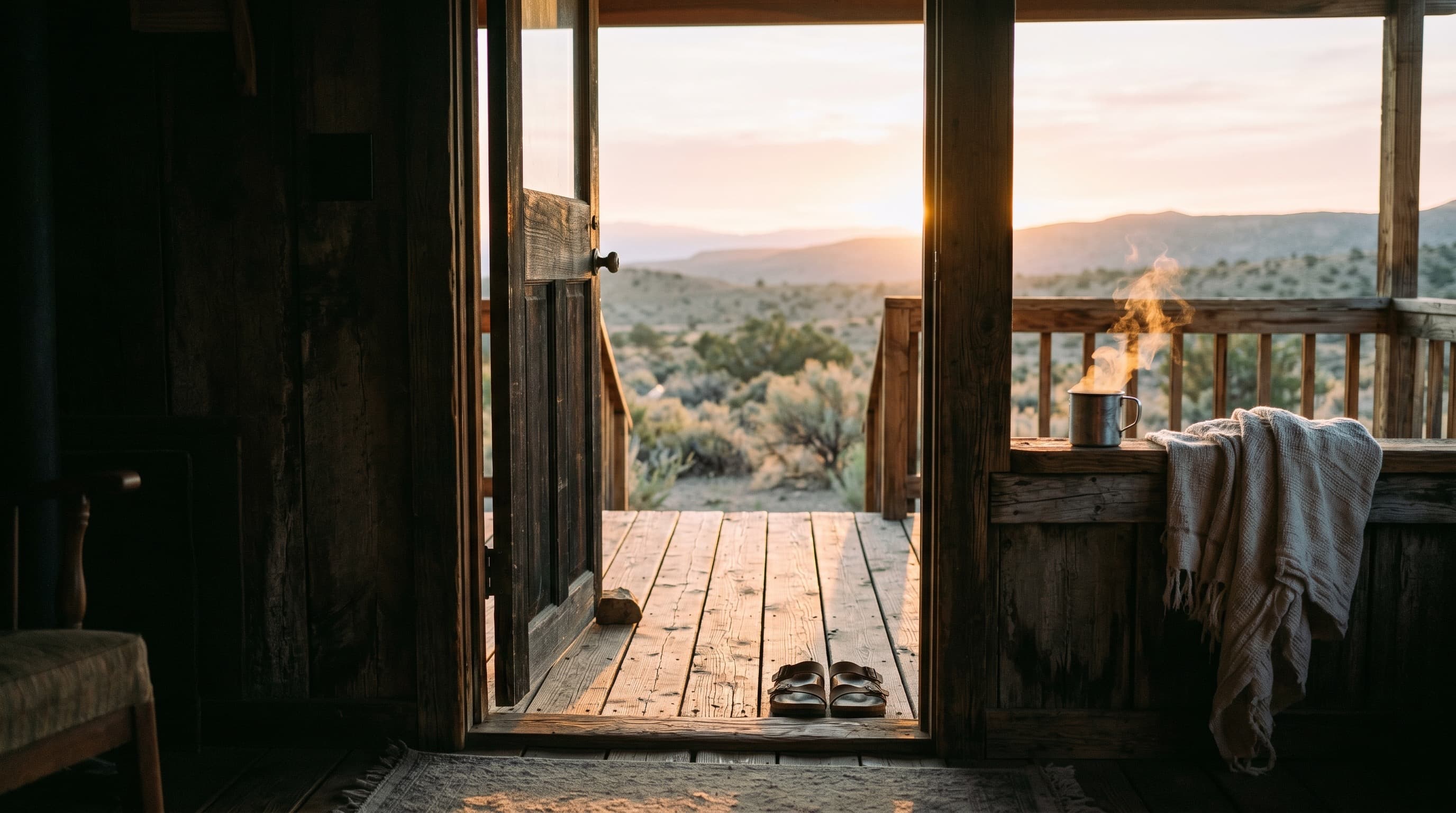
Outdoor daylight soon after waking, where bright morning light resets the body clock early in the day so sleep pressure and melatonin timing line up better by evening.
Morning outdoor light strengthens day-night contrast and anchors the circadian clock earlier, helping nighttime sleep feel more restorative.
limited evidence
Early daylight signals daytime to the circadian clock, aligning evening sleepiness with bedtime and shortening time spent trying to fall asleep.
limited evidence
outdoor light
Choose a safe repeatable outdoor spot: porch, balcony, courtyard, park path, or shaded open-sky area.
Go outside soon after waking; target first 30–60 min with before 10 AM as backup.
Face open sky or ambient daylight not the sun; no sun-gazing or forced glare.
Stay 10–30 min; start with 5–10 min if light-sensitive migraine-prone, heat-sensitive, or unsure.
Sit, stand, or walk gently; log walking separately if it becomes exercise.
Use shade hat, sunscreen, sunglasses, cooler timing, or skip when UV, glare, heat, medication, or symptoms require it.
Log wake time start time, minutes, weather, protection, activity, symptoms, and next-night sleep quality on a stable 0-10 scale where 0 is worst possible and 10 is best possible.
To keep results clean
Pick tomorrow’s spot before bed: porch, balcony, courtyard, park path, or shaded open-sky area.
Go out in the first 30–60 minutes after waking; before 10 AM is the backup.
Face open sky not the sun; sit, stand, or walk gently without turning it into exercise.
Cloudy mornings count; use open shade hat, sunscreen, or sunglasses when glare or UV would otherwise shorten sessions.
Do not add blue blockers melatonin, sleep supplements, or a new wake-time target during the run.
Log start time minutes, weather, shade/sunglasses, activity, and next-night sleep; treat window light as backup.
Anything unclear during the protocol? Ask Murph — your plan, baseline, and tracked signals are already loaded.
Bright outdoor light hits retinal clock pathways soon after waking. That signal anchors the circadian day more strongly than dim indoor light.
Morning phase signals help melatonin and alertness shift earlier. Sleep pressure still builds through the day; light tells the clock when the day started.
Repeated morning exposure gives the clock a stable daily cue. The payoff is steadier sleep onset, less evening drift, and clearer day-night contrast.
Outdoor light soon after waking · 10–30 min
Bright light hits the circadian clock; morning melatonin shuts down
Morning phase cue repeats before daily timing drifts
Clock anchors earlier · evening melatonin stabilizes · sleep onset aligns