
Loading dashboard
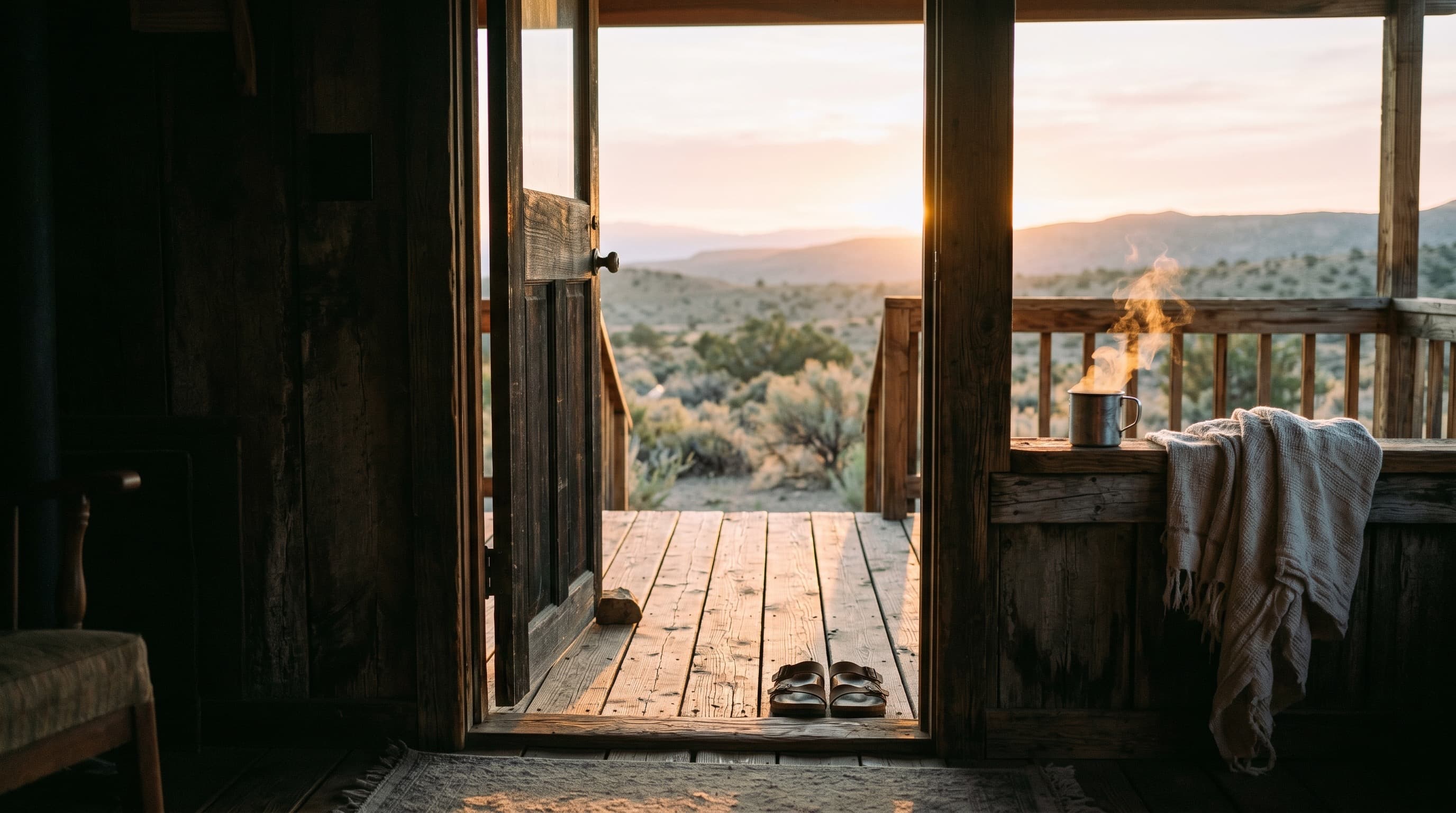
Outdoor daylight soon after waking, where bright morning light resets the body clock early in the day so sleep pressure and melatonin timing line up better by evening.
A repeatable outdoor morning-light habit is a plausible low-burden self-experiment for subjective sleep quality, sleep timing, morning alertness, and tolerability, not a proven treatment or a guaranteed wearable-sleep-stage intervention.
The landing evidence is useful but bounded: the closest direct evidence is small and older-adult/institutional, broader adult evidence is mostly observational, and safety boundaries come largely from adjacent bright-light, UV, eye, mood, and heat literature.
Direct outdoor morning-light trials are sparse; indoor light, light boxes, dawn simulators, clinical light therapy, and bundled walking/exercise routines should not be pooled into the default outdoor protocol claim.
Sources checked is every card shown on this page. Direct human participants counts only primary human studies with coded participant totals, deduplicated by cohort when possible. Review cards may show larger pooled head counts on their own rows, and those pooled totals are treated as approximate rather than added into the page-level number.
Closest direct sources prescribe or measure morning sunlight or outdoor natural light and report subjective sleep-quality improvements, but they are short, small, and mostly older-adult or institutional.
4 sources · 3 trials · 1 observational study
Exploring the Impact of Natural Light Exposure on Sleep of Healthy Older Adults: A Field Study
Brief report title and indexed metadata indicate subjective sleep quality improved with natural-light exposure in nursing-home residents.
A 40-minute morning outdoor natural-light protocol in older adults reported significant sleep-quality improvements.
Five days of direct morning sunlight exposure improved global subjective sleep quality in older nursing-home residents.
Adult survey, diary, UK Biobank, and measured outdoor-light studies make the habit plausible and help with timing, but they are mostly observational and endpoint-specific.
5 sources · 5 observational studies
Morning sunlight, relative to no sunlight, predicted better next-night subjective sleep quality; duration generally did not.
Brighter post-wake light related to lower morning sleepiness, while higher pre-bedtime light related to longer sleep onset latency.
More habitual outdoor daylight time was associated with fewer insomnia/tiredness symptoms and earlier chronotype in UK Biobank.
Morning sunlight before 10 AM was associated with earlier sleep midpoint and lower PSQI score, while several sleep parameters were null.
Less time in bright light was associated with more sleep-wake fragmentation, but afternoon timing—not morning timing—best discriminated consolidation in older men.
These sources support logging timing, duration, season, weather, setting, indoor/outdoor status, and evening light instead of pretending there is a universal lux or minute threshold.
8 sources · 3 guidance sources · 2 observational studies · 2 reviews
Older adults had much lower morning and bright-light exposure in winter than summer, while sleep-quality differences were not statistically detected.
A systematic review of the amount and timing of light in relation to sleep outcomes in adults
Season and geographic location strongly influenced human illumination exposure, mediated by indoor/outdoor behavior.
Wearable light measurement is heterogeneous, and device validation/reporting gaps can limit comparability across studies.
CIE position statement gives professional guidance for proper light at the proper time.
CIE standard defines the metrology system underlying melanopic and α-opic light metrics.
Melanopic illuminance is a key metric for circadian light-response magnitude.
Indoor-light recommendations provide modern melanopic dose anchors but are not outdoor-efficacy evidence.
Self-reported sleep quality and timing are the cleanest endpoints. Actigraphy, wearable sleep, alertness, and lab circadian markers are useful but secondary, indirect, or research-only.
8 sources · 5 trials · 2 observational studies · 1 review
Scheduled bright light shifted circadian phase but generally did not outperform scheduled dim light for insomnia outcomes.
Morning sunlight, relative to no sunlight, predicted better next-night subjective sleep quality; duration generally did not.
Morning blue-enriched light improved daytime sleepiness in a small insomnia pilot, while objective sleep and circadian biomarkers were not significant.
Brief report title and indexed metadata indicate subjective sleep quality improved with natural-light exposure in nursing-home residents.
The healthy-adult personal-light evidence base was limited, low quality, and mixed/conflicting across sleep and mood outcomes.
Morning sunlight before 10 AM was associated with earlier sleep midpoint and lower PSQI score, while several sleep parameters were null.
A 40-minute morning outdoor natural-light protocol in older adults reported significant sleep-quality improvements.
Five days of direct morning sunlight exposure improved global subjective sleep quality in older nursing-home residents.
Indoor daylight, workplace/classroom lighting, light boxes, dawn simulators, SAD/depression protocols, and bundled light-plus-activity routines belong in separate variants or context buckets.
12 sources · 6 trials · 5 reviews · 1 guidance source
Simulated dawn modestly improved subjective sleep quality while in use, but effects did not persist after stopping.
Light and walking arms improved short-term actigraphic wake time in AD, but benefits were not sustained at 6 months and light was not morning outdoor exposure.
Athlete travel intervention evidence is limited and not cleanly light-isolated.
Indoor daylight access at home stabilized circadian timing and improved selected sleep and mood measures, while some sleep endpoints were unchanged.
A large behavior bundle including morning sunlight was associated with improved sleep consistency and cardiorespiratory metrics.
Scheduled bright light shifted circadian phase but generally did not outperform scheduled dim light for insomnia outcomes.
Blue-enriched workplace light improved self-reported alertness, performance, mood, sleep quality, and some comfort symptoms compared with standard white light.
Clinical Practice Guideline for the Treatment of Intrinsic Circadian Rhythm Sleep-Wake Disorders: An Update for 2015
Light therapies to improve sleep in intrinsic circadian rhythm sleep disorders and neuro-psychiatric illness: A systematic review and meta-analysis
Light Therapy for Patients With Bipolar Depression: Systematic Review and Meta-Analysis of Randomized Controlled Trials
Adjunctive bright light therapy for treating bipolar depression: A systematic review and meta-analysis of randomized controlled trials
Light therapy in insomnia disorder: A systematic review and meta-analysis
Older-adult, adolescent, athlete, delayed-sleep-phase, shift-work, high-latitude, and travel/jet-lag evidence changes boundaries and logging; it does not define one universal morning-light rule.
14 sources · 8 observational studies · 3 trials · 2 supporting sources
Afternoon-shift students slept longer and were less sleepy but had lower light exposure than morning-shift students.
Evening-type student workers reported poorer sleep and fatigue and had lower moderate waking light, while objective sleep parameters did not differ by chronotype.
Elite-sport sleep intervention evidence includes light therapy but remains heterogeneous.
Delayed sleepers showed more light/activity in the biological night and less morning light/activity than controls.
DSWPD participants had less phase-advancing light exposure relative to circadian timing despite complex clock-time patterns.
Morning sunlight, relative to no sunlight, predicted better next-night subjective sleep quality; duration generally did not.
Morning/daytime light was linked with better sleep indices in athletes, but evening light was linked with worse sleep-behavior scores.
More habitual outdoor daylight time was associated with fewer insomnia/tiredness symptoms and earlier chronotype in UK Biobank.
Brief report title and indexed metadata indicate subjective sleep quality improved with natural-light exposure in nursing-home residents.
Morning sunlight before 10 AM was associated with earlier sleep midpoint and lower PSQI score, while several sleep parameters were null.
A 40-minute morning outdoor natural-light protocol in older adults reported significant sleep-quality improvements.
Natural light-dark exposure can entrain human circadian timing, but the intervention is not a brief morning-only protocol.
Season and weekend natural-light patterns can influence circadian and sleep timing.
Five days of direct morning sunlight exposure improved global subjective sleep quality in older nursing-home residents.
Direct outdoor harms reporting is sparse, so safety copy leans on adjacent bright-light therapy, bipolar/mood activation, migraine/photophobia, ocular/UV, photosensitivity-medication, and heat guidance.
27 sources · 15 reviews · 5 guidance sources · 3 trials
Bright-light treatment produced mostly mild side effects, including jitteriness, headache, nausea, and timing-related activation signals.
Current understanding of photophobia, visual networks and headaches
Photophobia is a clinical condition where light exposure can cause pain or substantial discomfort.
Neurobiology of Photophobia
Management review translates drug-induced photosensitivity into practical diagnosis, prevention, and management concerns.
Drug-induced photosensitivity can arise from phototoxic or photoallergic mechanisms under sunlight or artificial light.
In a short-term 10,000-lux light-therapy report, side effects were common but mostly mild and transient.
Registry specified a six-week outdoor morning-daylight protocol of at least 30 minutes/day before 1 PM.
AAO public guidance supports UV eye-protection counseling for outdoor sunlight exposure.
CDC heat guidance provides practical steps for modifying or avoiding outdoor activity during extreme heat.
Photoprotection of the eye - UV radiation and sunglasses
Phototoxicity to the retina: mechanisms of damage
Ultraviolet radiation as a risk factor for cataract and macular degeneration
Controlled trial of safety and efficacy of bright light therapy vs. negative air ions in patients with bipolar depression
Phototoxicity of Doxycycline: A Systematic Review on Clinical Manifestations, Frequency, Cofactors, and Prevention
The dedicated eye-safety review found ocular complaints but little evidence of ocular damage in healthy unmedicated light-therapy users, with uncertainty for ocular disease or photosensitivity.
Adjunctive Bright Light Therapy for Bipolar Depression: A Randomized Double-Blind Placebo-Controlled Trial
The historical review estimated low aggregate mania/hypomania switch rates after light therapy but identified rapid cycling and assessment method as important caveats.
Efficacy and safety of bright light therapy for manic and depressive symptoms in patients with bipolar disorder: A systematic review and meta-analysis
Hot weather and heat extremes: health risks
Extreme Heat and Occupational Health Risks
The phenomenon of phototoxicity and long-term risks of commonly prescribed and structurally diverse drugs
ISBD clinical recommendations emphasize anti-manic prophylaxis, conservative titration, and monitoring when using light therapy in bipolar disorder.
Suicidal tendencies as a complication of light therapy for seasonal affective disorder: a report of three cases
The WHO Global Solar UV Index gives a public-health framework for deciding when outdoor light needs sun-protection boundaries.
WHO UV guidance distinguishes beneficial small UV exposure from excessive UV risk and recommends protection at UVI 3 or above.
Five days of direct morning sunlight exposure improved global subjective sleep quality in older nursing-home residents.