
Loading dashboard
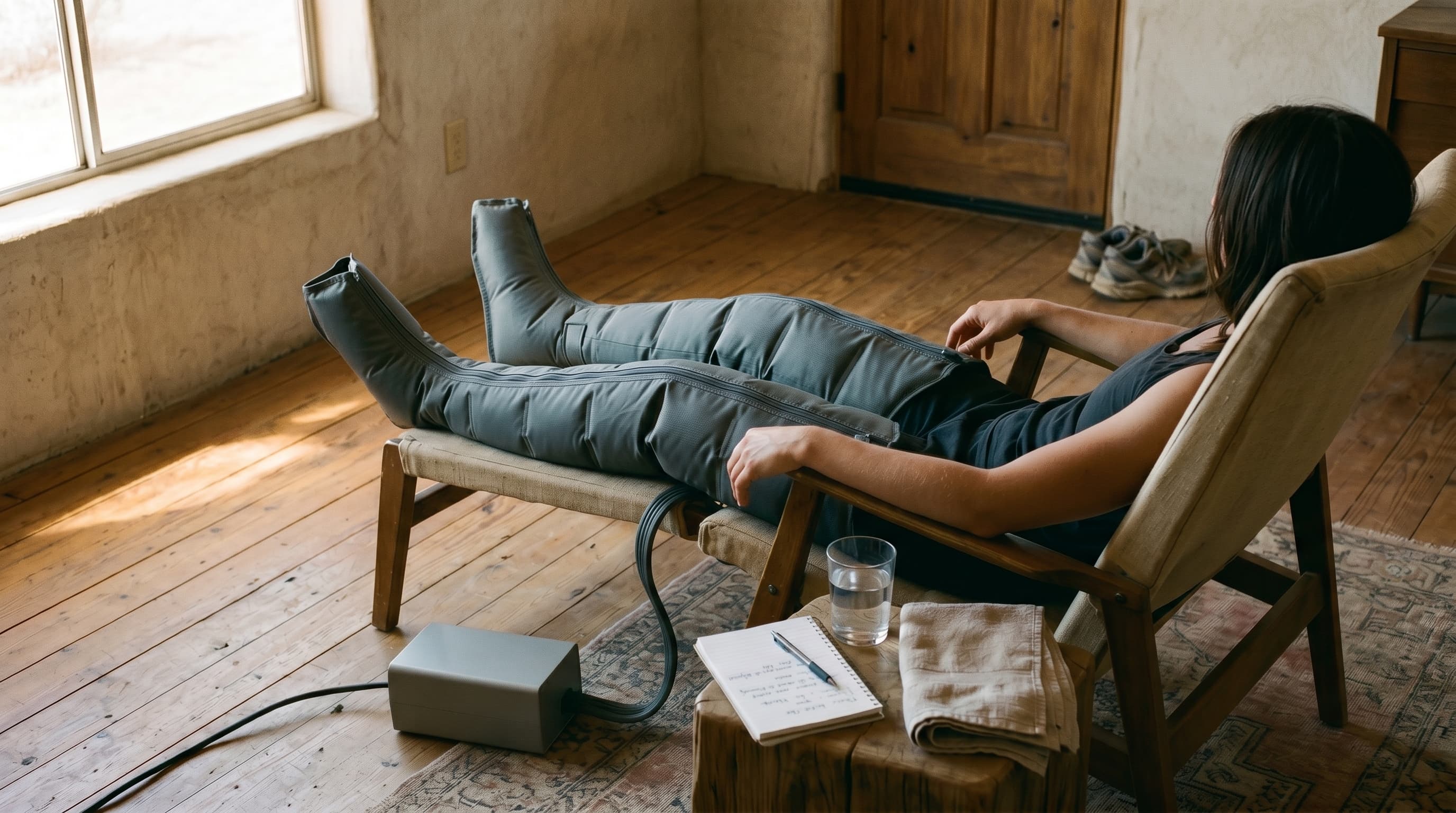
Pneumatic compression pants that rhythmically squeeze the legs, helping move blood and fluids to potentially ease soreness and improve comfort after exercise.
Compression cycles squeeze and refill leg tissue, moving venous blood and interstitial fluid to reduce pooling, stiffness, and soreness.
moderate evidence
Sequential pressure empties and refills the lower legs, reducing pooled fluid that makes legs feel heavy.
limited evidence
Fluid movement and quiet rest reduce immediate leg fatigue, making the next session feel more available.
limited evidence
compression
Complete safety screen; do not use for clot prevention swelling treatment, wound care, surgery prophylaxis, or medical compression.
Record device model garment coverage, pressure/intensity, mode, duration, posture, and trigger context.
Inspect skin and equipment; confirm quick removal and no focal pressure on nerves, joints, groin, hardware, grafts, or lesions.
Sit or recline; do not walk with attachments; keep tubing cords, and garments from creating fall risk.
Start at lowest comfortable setting; stop for pain numbness, tingling, hotspots, or bracing against pressure.
Run 20–30 min after the chosen trigger keeping the rest of recovery stable.
Stop early for any stop condition; remove garment inspect skin, and log symptoms.
Keep device pressure, duration, mode, and timing consistent unless safety or comfort requires lowering dose.
To keep results clean
Before day 1 record device model, garment coverage, mode, pressure level, posture, and trigger.
Make the first session a tolerance check: lowest comfortable pressure, 20 minutes, easy removal path.
Sit or recline and keep tubing clear; stop and remove the garment for bracing, tingling, numbness, or hotspot pressure.
Do not add massage cold plunge, sauna, aggressive stretching, blood-flow restriction, or new recovery supplements during the test.
After removal inspect skin immediately and later that day; log pressure marks, symptoms, and resolution.
Compare matched triggers: same workout type, standing day, or sitting duration; never use it as a clot plan.
Anything unclear during the protocol? Ask Murph — your plan, baseline, and tracked signals are already loaded.
Sequential compression empties veins and interstitial fluid from the legs during inflation. Deflation allows refill; each cycle moves blood and fluid through tissue.
The best signal is how the legs feel after a matched trigger: soreness, heaviness, and fatigue. It is not proof that muscle damage reversed.
Lowest comfortable pressure keeps the mechanism circulatory. Pain, numbness, skin marks, swelling, or focal pressure means the device is loading the wrong tissue.
20–30 min sequential leg compression · low comfortable pressure
Inflation empties veins and fluid; deflation allows refill
Post-exercise pooling, heaviness, and soreness meet same cycle
Legs feel lighter · soreness drops · comfort improves