Do More Pull-Ups
Increase pull-up repetitions with submaximal practice, stronger pulling muscles, and enough recovery.
 Ask Murph to help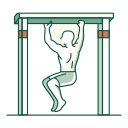
More pull-ups take a stronger single rep and the endurance to repeat it. Testing your max every session turns practice into fatigue. Most sets should end before technique changes, with enough weekly reps to groove the pattern.
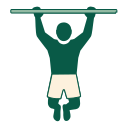
Define your pull-up: grip, starting hang, chin height, and whether kipping counts. Strict overhand, neutral-grip, and chin-up are related but different skills. Pick one as the anchor so the count means the same thing month to month.
What to do
- Practice two to four times a week, depending on ability and total training.
- Keep most sets at about half to two-thirds of your max.
- End a set before swinging, shortened range, or slow grinding takes over.
- Once you can do several clean reps, add max strength work: weighted pull-ups or harder low-rep variations.
- Use assisted pull-ups for quality volume after unassisted sets.
- Train rows and elbow flexors, and watch total shoulder and elbow load.
If your max is two or three, use many small sets of one or two plus assisted work. At 15, larger submaximal sets and occasional added weight work better.
A simple plan
Warm up and test one clean max. Three times a week, do five sets at about half that number: sets of four for a max of eight. Rest two minutes or longer. Add one rep to one set at a time until every set has gone up.
On the week's first session, add two heavier sets of 3 to 5 reps with a little weight or a harder variation. On the third, add two assisted sets of 6 to 10 after the unassisted work. Keep the middle session simple and stop while fresh.
Retest after four weeks, following a lighter day. If the max rose, reset the training sets from the new number. If it didn't but total clean volume rose, run another block rather than changing everything.
When unassisted reps fall short, do the planned clean sets and finish the volume on a machine or with a band. In a high-volume block, rotate grips only if each stays comfortable, and track the anchor grip separately.
After several hard weeks, cut sets in half for a week. Elbows and shoulders may need it even when the muscles feel ready for more.
How to know it is working
Track total clean reps across the same number of sets, added weight on a low-rep set, and the standardized max. A rising total with stable form is a strong leading signal. Note grip and range, since small changes shift the result.
Body weight changes relative strength, but pulling strength can improve at any size. Measure what you can act on: volume, assistance, load, and recovery.
If you get stuck
If the first reps feel strong but endurance collapses, add assisted back-off volume. If every rep is slow, build max strength with short weighted or low-assistance sets. If grip fails first, train carries or hangs, but not on top of exhausted elbows every day.
Pull-ups overlap with climbing, rows, pulldowns, curls, and manual work. Persistent elbow irritation often means total pulling and gripping volume is too high. Cut the aggravating work and rebuild. More frequency helps only when each session is small enough to recover from.