Do My First Pull-Up
Build the pulling strength, grip, and specific practice needed for one controlled pull-up.
 Ask Murph to help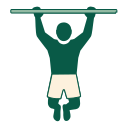
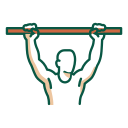
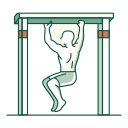
A first pull-up is a clear strength skill: hang from a stable bar, pull until the chin clears it, and lower with control. Repeated failed attempts rarely give you enough useful training. Build the movement with assisted pull-ups, pulldowns, rows, controlled lowerings, and grip work, then test the full skill occasionally.
Pull-ups depend on pulling strength and on how much body mass you're moving, but the goal doesn't require weight loss. Assistance lets anyone scale the movement today. Focus on building usable strength and reducing assistance over time.
What to do
- Train vertical pulling two or three times a week with a recovery day between hard sessions.
- Use an assisted-pull-up machine, bands, foot support, or pulldown that allows 4 to 8 controlled reps.
- Practice the full range you have without swinging or kicking.
- Add rows for the upper back and curls or hammer curls for the elbow flexors.
- Train grip with hangs or carries if the hands fail before the pulling muscles.
- Keep most sets short of failure so each rep resembles the skill you want.
Band assistance is strongest at the bottom and changes through the movement, so a machine or foot-supported setup may be easier to progress in small steps. Any works if you record the assistance and keep it consistent.
A simple plan
Three times a week, do three sets of 4 to 8 assisted pull-ups with assistance that leaves about two good reps in reserve. Follow with two sets of rows and two sets of curls. On two days, finish with two short active hangs or controlled lowerings.
When all assisted sets reach eight clean reps, reduce assistance by a small step and return to four or five. For controlled lowerings, step to the top, pause briefly, and take three to five seconds to descend. Do only two or three per set; too much eccentric work brings heavy soreness without speeding things up.
Every two weeks, after warming up and before assisted work, try one full pull-up. Start from a controlled hang, set the shoulders, and pull without a kick. If it doesn't happen, the assistance trend still tells you whether training is working.
How to know it is working
Record assistance, reps, grip, and range. Progress means less counterweight, a lighter band, less foot pressure, a heavier pulldown, a longer controlled lowering, or a stronger top hold. Those are real steps, not consolation prizes.
Compare like with like. Chin-ups with palms facing you often feel easier than overhand pull-ups because the elbow flexors contribute differently. Both build pulling strength, but decide which one your goal means.
If you get stuck
If you can't start from the bottom, practice active hangs, pulldowns, and assisted reps through that section. If you get near the top but stall, add top holds and rows and keep the full assisted pulls. If grip gives out first, train short hangs and carries separately.
If assistance isn't dropping, check frequency and effort. One session a week may be too little practice; failing every day may be too much. Keep the main work challenging but repeatable. Big swings in body weight, sleep, and prior upper-body training also change performance.