Build Leg Strength
Build stronger hips, knees, and ankles for lifting, stairs, sport, and everyday movement.
 Ask Murph to help
Strong legs make ordinary life easier: standing, climbing, carrying, changing direction, absorbing a landing, and keeping up the activities you enjoy. No particular barbell lift is required. Train the main jobs of the lower body with enough challenge and build up gradually.
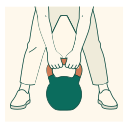
A balanced plan has a knee-dominant movement like a squat or step-up, a hip-dominant movement like a hinge or bridge, some single-leg work, and an ankle or calf movement. Versions vary with equipment and comfort. A chair squat is a fine starting point if it is the right challenge today.
What to do
- Train the legs twice a week on nonconsecutive days.
- Across the week, include a squat or leg press, a hinge or hip extension, and a step or split-stance movement.
- Add calf raises or another ankle exercise, especially if you walk, run, or jump a lot.
- Use support for balance when it lets the target muscles work harder and more safely.
- Progress one thing at a time: range, reps, resistance, or difficulty.
- Keep at least one exercise closely tied to the real task you want to improve.
Resistance training improves strength and function in many formats. Machines remove balance as a limiting factor; free weights and single-leg work make stabilizing part of the task. Use whatever combination is repeatable and relevant.
A simple plan
On day one, do a squat or leg press, a hip hinge, and a calf raise. On day two, do a step-up or split squat, a hip bridge or hamstring curl, and another squat variation. Start with two working sets of 6 to 12 reps for the larger exercises and 10 to 20 for calf or hamstring work.
Start at a level that allows smooth reps with about three good reps in reserve. When both sets reach the top of the range with the same depth and control, add a little resistance. For a bodyweight movement, lower the support, add range, slow the descent, or hold a light load.
For everyday function, practice the actual task once a week: several controlled chair rises, a short flight of stairs, or carrying groceries. Treat it as practice, not a test to exhaustion. For sport, keep the strength plan alongside gradual sport-specific work, since gym strength doesn't automatically become speed or skill.
How to know it is working
Track a squat or leg press, a hinge or bridge, and one functional task. Progress means more weight, more reps at the same weight, a deeper comfortable range, less hand support, or better control on one leg. Stairs, hills, and low seats may also feel easier.
Test under similar conditions every four weeks. One hard day may reflect poor sleep, a recent run, or normal variation; the trend matters. Soreness isn't required and shouldn't keep disrupting walking or the next session.
If you get stuck
Check whether balance, grip, or breathlessness ends the set before the legs are challenged. A machine, support rail, lifting straps, or longer rest may show the legs can do more. If one movement keeps hurting, switch pattern or range and keep the rest of the plan going.
Progress can also stall when hard running, field sports, or long hikes already leave the legs fatigued. Put demanding sessions on separate days when possible and cut lifting volume in heavy sport weeks. More work only helps when you can recover from it.