Jump Higher
Improve vertical jump with strength, power, landing skill, and a manageable amount of jumping.
 Ask Murph to help
Jump height comes from producing force fast and aiming it well. That takes lower-body strength, practice at high-quality jumps, and learning to use the ankles, knees, hips, arms, and approach together. Jumping until you're exhausted rarely helps, because power drops as fatigue rises.
The right program depends on where you start. New lifters may gain from basic squats and hinges; strong athletes may need more specific plyometrics and approach practice. Most people do best with a small dose of both and enough recovery between hard landings.
What to do
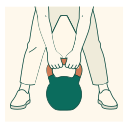
- Strength-train the legs two days a week with a squat, hinge, and single-leg movement.
- Practice maximal or near-maximal jumps one or two days a week while fresh.
- Keep jump sets small, often three to five reps, with full rest.
- Add lower-intensity hops or skips only in amounts your ankles and knees tolerate.
- Practice the exact jump that matters: standing, approach, one-foot, or two-foot.
- Land quietly and in control. Stop when height or coordination clearly drops.
Research syntheses find that plyometric and resistance training both improve jumping, and combining them often works well. Response varies with training history, and no program can credibly promise a fixed number of inches.
A simple plan
Day one, after a warm-up: four sets of three countermovement jumps with two minutes of rest, then squats for three sets of 4 to 6, Romanian deadlifts for three sets of 6 to 8, and calf raises. Day two: four sets of two to three approach jumps, then split squats, a hip-extension exercise, and a low-volume hop or bound drill.
Leave at least 48 hours between hard jump days. Start with 20 or fewer high-effort ground contacts per session, and add contacts only if landings stay controlled and your knees, shins, Achilles tendons, and feet feel normal the next day.
Add load to the lifts when reps are clean. Improve the jumps through intent, approach rhythm, and takeoff, not a weighted vest on every drill. Reassess after six to eight weeks, and take an easier week if jump quality or leg freshness is falling.
How to know it is working
Use the same test, surface, shoes, reach method, and warm-up every time. Measure a standing vertical or approach touch every two to four weeks. Smartphone video against a known reference works if the method stays consistent.
Track strength and jump quality too. A stronger squat, faster-feeling takeoff, and more controlled landing are good leading signs. Daily jump height moves with fatigue, motivation, and measurement error, so use the best of several rested attempts and watch the trend.
If you get stuck
If strength is low, keep jump volume modest and focus on progressive lower-body lifting. If strength is solid but the jump feels slow, add low-volume explosive work with longer rests. If approach jumps vary a lot, work on rhythm and takeoff position rather than adding gym exercises.
If your knees, shins, or Achilles stay sore, cut ground contacts and drop depth jumps and other high-impact drills. Hard court play, sprinting, and running all count toward plyometric load; the body sees total landings, not workout names.