Understand My Cholesterol
Understand cholesterol results, everyday lifestyle factors, and questions for your clinician.
 Ask Murph to help
“Cholesterol” is a group of measurements, so a good plan starts with the one that needs to change. LDL cholesterol and non-HDL cholesterol reflect the particles that build plaque; ApoB can add clarity when triglycerides are high or results disagree. HDL helps with risk assessment, but raising HDL on its own has not proved to be a dependable treatment.
The job is to lower atherogenic cholesterol enough for your level of risk, on a plan you can keep. Someone with known cardiovascular disease, diabetes, kidney disease, a very high baseline LDL, or a strong family history may need a far more intensive plan than someone at low short-term risk.
What to do
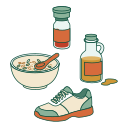
- Replace, don’t just remove. Swap butter, fatty processed meat, coconut oil, and some full-fat dairy for olive oil, nuts, seeds, avocado, fish, beans, and other unsaturated-fat foods.
- Eat soluble fiber most days. Oats, barley, beans, lentils, fruit, and psyllium can help lower LDL. Increase gradually and drink fluid with it.
- Build meals from minimally processed foods. Vegetables, fruit, whole grains, legumes, fish, and nuts make it easier to improve cholesterol without counting every gram.
- Move regularly. Aerobic activity and strength training improve cardiovascular health and can help triglycerides, blood pressure, fitness, and weight even when LDL changes modestly.
- Stop smoking and address excess weight if relevant. Both change cardiovascular risk beyond what a lipid panel shows.
- Use medication when your risk warrants it. Statins have the deepest evidence base; other therapies can be added or used in specific situations. A supplement marketed for cholesterol is no substitute for a regulated treatment plan.
A simple plan
Get a baseline lipid panel and settle the main target with your clinician: LDL, non-HDL cholesterol, ApoB, or triglycerides. Note the context: whether the test was fasting, current medicines, recent illness, major weight change, and family history of early heart disease.
For the next six weeks, choose three changes you can repeat. For example: oatmeal or beans most days, olive oil instead of butter at home, and 150 minutes of moderate activity spread across the week. If medicine is prescribed, taking it is part of the same plan, not a separate project.
Retest at the interval your clinician recommends. You are checking whether the plan produced enough change, not going for a perfect score. If it didn’t, the next step may be better adherence, stronger treatment, or a check for a secondary cause.