Understand My LDL Cholesterol
Understand LDL cholesterol results, how they fit your health history, and questions for your clinician.
 Ask Murph to help
LDL cholesterol is a major, modifiable cause of atherosclerotic cardiovascular disease. Lowering it reduces risk, but the right goal is personal. It depends on your starting LDL, age, diabetes and kidney status, blood pressure, smoking, family history, imaging, and whether you already have cardiovascular disease.
The strategy is simple. Cut the LDL burden with food changes you can maintain, add medication when the expected benefit is meaningful, and retest to see whether the plan is strong enough. Every meal doesn’t have to be perfect, and you don’t have to cut out all fat.
What to do
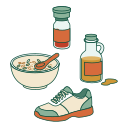
- Replace saturated fat with unsaturated fat. Use olive or canola oil instead of butter, choose nuts, seeds, avocado, fish, and beans more often, and cut back on the fatty processed meats and high-saturated-fat foods you eat most. Replacement is the point: swapping butter for refined starch is not the same as swapping it for unsaturated fat.
- Eat soluble fiber daily. Oats, barley, beans, lentils, apples, citrus, and psyllium are practical options. Build up slowly if your gut isn’t used to much fiber.
- Use a whole-food meal pattern. A Mediterranean-style or similarly plant-forward pattern can improve overall cardiovascular risk without a special “cholesterol diet.”
- Be physically active. Exercise may change LDL only modestly, but it improves fitness, blood pressure, insulin sensitivity, triglycerides, and long-term risk.
- Take prescribed therapy consistently. Statins are the usual foundation when medication is indicated. Ezetimibe, PCSK9-directed medicines, bempedoic acid, and other options fit particular risk levels or tolerability needs.
- Skip unregulated shortcuts. Red yeast rice can contain a statin-like compound in unpredictable amounts and can carry similar risks. “Natural” says nothing about dose or purity.
A simple plan
First, confirm a baseline and decide with your clinician what result would be meaningful. Ask whether non-HDL cholesterol or ApoB should be followed too, especially if triglycerides, diabetes, or metabolic disease complicate the picture.
Next, audit one normal week. Find your two biggest repeat sources of saturated fat and replace them. Add one soluble-fiber food every day. Schedule three to five bouts of activity that fit your current capacity. If you have a prescription, tie it to a stable daily cue and set up refills before they become urgent.
Hold the plan steady until the recommended follow-up test, often weeks rather than days, unless side effects mean you need to call sooner. Then let the measured response decide whether to continue, strengthen, or simplify.
How to know it is working
What to expect
Diet response varies because genes influence how much cholesterol the liver clears. Some people get a meaningful reduction from food alone; others make excellent changes and still need medication. That is biology, not failure. Therapies also differ a lot in potency, so treatment intensity should match how much lowering you need and your risk.
After you reach the goal, keep the habits and treatment that got you there. A lower result doesn’t mean the underlying tendency went away. Once the regimen is stable, testing can usually become less frequent, with an earlier check after a major dose, weight, diet, or health change.