Quit Nicotine Pouches
Stop using nicotine pouches with a clear quit plan, practical cue changes, and support for cravings and withdrawal.
 Ask Murph to help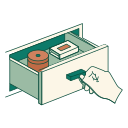
Nicotine pouches are easy to use almost anywhere, so dependence gets woven into work, driving, meals, exercise, and stress. A quit plan has to cover both nicotine withdrawal and the situations that prompt an automatic pouch.
Pouches don't expose the lungs to smoke, but they aren't harmless or non-addictive, and the FDA has not approved them as quit-smoking medicines. If you also smoke or vape, plan against switching back and forth between products.
What to do
- Measure your starting pattern. For three ordinary days, record the number of pouches, labeled nicotine strength, first use of the day, and the situations linked to use. Don't bother estimating an absorbed dose; labels and individual absorption don't tell the whole story.
- Choose a defined quit approach. Set a quit date or discuss a time-limited taper with a clinician; either way, use dates and milestones, not an open-ended intention to use fewer.
- Use established tobacco-cessation support. A quitline, clinician, pharmacist, counselor, or cessation program can provide behavioral support. Evidence on medication specifically for quitting pouches is limited, so ask whether an FDA-approved quit-smoking medicine suits you.
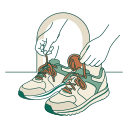
- Change availability. Before your quit date, remove tins from your desk, car, bag, and bedside. Cancel recurring orders and don't buy a reserve.
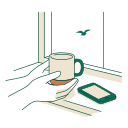
- Replace the cue, not just the product. Sugar-free gum, water, a crunchy snack, a short walk, or a two-minute pause can fill the oral and break routine while treatment handles the nicotine dependence.
- Plan for your strongest moments. Write a specific response for waking, driving, after meals, concentrating, social drinking, and stress: where you'll go, what you'll do, and whom you'll contact.
- Protect against other nicotine use. Remove any cigarettes, vapes, or smokeless tobacco too, and tell your support person that avoiding substitution is part of the goal.
A simple plan
Choose a quit date within the next two to four weeks. Track use for three days and circle the three pouches that feel hardest to skip. Those moments get your strongest replacements and support, not willpower alone.
Before the date, contact a quitline, pharmacist, or clinician and share the pouch strength, frequency, other nicotine use, previous quit attempts, and any health conditions or pregnancy. Ask about counseling and medication rather than improvising with another tobacco product.
On the quit date, dispose of tins and backups safely. Keep water, gum, and your support contacts nearby. When a craving arrives, delay a few minutes, change location, use the planned replacement, and repeat if needed. Eat regular meals and protect sleep; hunger and exhaustion make a familiar cue feel more urgent.
Review after three days, one week, two weeks, and one month. Count pouch-free days and note which cues are getting easier. If you use a pouch, stop the episode, remove the remaining supply, and resume the plan that day. A lapse is information about the plan, not a reason to return to daily use.
How to know it is working
The clearest signal is more time without pouches. You may also notice fewer automatic checks for a tin, more confidence in settings that used to trigger use, less money spent, and less need to arrange your day around nicotine.
Track behavior weekly rather than judging every craving. Early urges, irritability, restlessness, low mood, sleep changes, appetite changes, or trouble concentrating can occur with nicotine withdrawal. You won't feel perfect right away; stay supported while the pattern weakens.
If you get stuck
If cravings keep breaking the plan, don't just tighten the rules; review your nicotine pattern and treatment with a clinician or quitline. Check whether pouches are still easy to get, whether alcohol or certain social settings trigger use, and whether an untreated need such as stress, attention, or sleep is pulling you back.
If you were using pouches to avoid smoking, make cigarette-relapse prevention explicit. Counseling and FDA-approved quit-smoking medicines are established options for smoking cessation; evidence specific to quitting nicotine pouches is still limited. Young people should use age-appropriate support, because nicotine can affect the developing brain.