Build a Habit That Sticks
Turn one useful action into a more automatic part of daily life through repetition, stable cues, and a realistic fallback.
 Ask Murph to help
A habit is a behavior that gets easier to start when a familiar situation shows up. It isn’t a streak, a personality, or proof of discipline. The most reliable way to build one is to repeat a specific action in a stable context and keep it small enough to survive ordinary life.
The popular claim that habits take exactly 21 days isn’t supported. A 2024 systematic review found enormous variation: reported medians were roughly two months, and individual estimates ranged from days to many months depending on the person and the behavior. Aim for repetition and ease, not a magic day.
What to do
- Choose one observable behavior. “Be healthier” isn’t a habit. “Take a ten-minute walk after lunch” is.
- Attach it to a stable cue. Use something that already happens: after brushing your teeth, when lunch ends, or when you get home. Clock time can work, but event-based cues often survive schedule changes better.
- Set a minimum version. Define the smallest action that keeps the habit alive: one minute of stretching, one page, or putting on walking shoes and stepping outside.
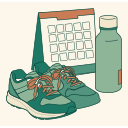
- Prepare the environment. Put the medication by the toothbrush, shoes by the door, or the water bottle on the desk.
- Repeat before expanding. Increase duration or difficulty only once the current version happens reliably.
- Make the result satisfying. Notice completion, pair it with something pleasant, or use a simple check mark.
- Plan the restart. Missing once is ordinary. The next available cue is the restart, not Monday or a new month.
A simple plan
Write one sentence: “After cue, I will minimum behavior at place.” For example: “After I put my lunch plate away, I will walk outside for five minutes.” Choose a minimum you could do on a busy day without negotiating with yourself.
For the first two weeks, track only whether the minimum happened at the cue. Doing more is fine, but don’t raise the official minimum. Note any miss with one reason: cue didn’t happen, forgot, environment blocked it, behavior too large, or chose not to.
After two weeks, fix the biggest source of misses. A missed cue needs a more stable anchor. Forgetting needs a visible object or reminder near the action. Environment problems need preparation. A behavior that feels too large needs a smaller minimum. If you keep choosing not to do it, ask whether this goal matters to you or another behavior would serve it better.
Continue for six to ten weeks before judging automaticity. Once the minimum happens on most intended occasions and starts with little debate, expand one thing by a small amount: duration, frequency, or difficulty. Keep the minimum version for travel, illness, or overloaded weeks.
How to know it is working
The first sign is consistency, not automaticity. Later, the cue starts to trigger the action, you need fewer reminders, and starting takes less effort. Another strong sign is resilience: a disrupted week no longer ends the habit for good.
Use weekly completion as feedback, not a grade. Four out of five intended times means the system is working. Once means the design needs to change.
If you get stuck
If you keep adding trackers, rewards, and reminders, simplify. One cue, one minimum, and one visible setup are usually enough. If the habit conflicts with pain, fatigue, caregiving, or medication side effects, adapt the behavior instead of forcing it.
Some actions shouldn’t become mindless. Medication changes, intense exercise, fasting, and health decisions may need active checks or clinical guidance.