Break a Bad Habit
Replace an unwanted automatic behavior by changing its cues, adding friction, and meeting the need it currently serves.
 Ask Murph to help
An unwanted habit persists because it’s easy, cued by a familiar situation, and useful in the short term. It may bring relief, stimulation, escape, comfort, or social connection even when the long-term cost is obvious. Redesigning the pattern works better than demanding more willpower at the moment of temptation.
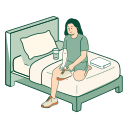
Start with one behavior you can observe. “Stop being unhealthy” is too broad. “Stop opening social media in bed” gives you a cue, a context, and a countable outcome.
What to do
- Map the pattern. For several days, note what happened right before the behavior, where you were, who was there, how you felt, and what changed afterward.
- Identify the short-term payoff. The habit may relieve boredom, postpone a hard task, create a break, or soothe stress. A replacement has to cover at least part of that.
- Change the cue where you can. Take a different route, move the app, keep the food out of the house, or leave the device outside the room.
- Add useful friction. Log out, remove stored payment details, store the item farther away, or require a ten-minute delay.
- Install a specific replacement. Decide what happens instead: drink water, walk for two minutes, message a friend, or start the first step of the task.
- Practice at the real trigger. A replacement becomes useful through repetition in the same setting.
- Treat lapses as data. Ask which cue, need, or setup was missed.
A simple plan
For one week, observe the habit without trying to win every time. Record only the meaningful episodes: cue, behavior, immediate payoff, and later cost. Then pick the most common trigger and one replacement that fits the same moment.
Write an if-then plan: “If trigger happens, then I will replacement before deciding what to do next.” Add one change to the environment. For example: “If I reach for social media in bed, I will put the phone on the charger outside the room and read one page.”
For the next two weeks, track three things: trigger occurred, replacement attempted, unwanted behavior occurred. A trigger followed by the replacement before a lapse is evidence the sequence is changing, even without full abstinence.
If the behavior still happens nearly every time, make the replacement easier or the old behavior harder. If it shows up in several unrelated settings, tackle one context at a time. If the payoff is emotional relief, add a second plan for the underlying stress rather than leaning on a substitute behavior.
How to know it is working
Look for lower frequency, longer delay, smaller intensity, and more triggers that end in a choice. The first improvement may be noticing halfway through instead of afterward.
Use weekly totals or rates in a specific context, not a perfect streak. Dropping from daily to twice a week is real progress. Decide whether reduction or complete stopping is the right outcome for this habit.
If you get stuck
If the habit involves alcohol, nicotine, drugs, eating-disorder behavior, self-harm, gambling, or another behavior with dependence or serious risk, generic habit design isn’t enough. Evidence-based treatment, medication, peer support, or clinical monitoring may be appropriate.
If you keep swapping one compulsive behavior for another, focus on the need and the context rather than the object. Chronic stress, loneliness, pain, trauma, ADHD, anxiety, and depression can all make high-reward habits harder to change.