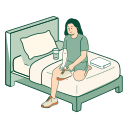
Build an Evening Routine
Create a simple end-of-day sequence that closes open loops, prepares tomorrow, and makes room for sleep and recovery.
 Ask Murph to help
An evening routine bridges the active day and whatever comes next. It can close out work, cut morning friction, make room for connection, and protect sleep. A useful routine is short enough to do when you’re tired, with no candles, supplements, or hour-long ritual required.
Decide what problem the routine should solve. If you work too late, it needs a shutdown. If mornings are chaotic, it needs preparation. If bedtime drifts, it needs a consistent start and sleep window. Build around the real bottleneck instead of collecting generic “night routine” steps.
What to do
- Choose a start cue. The end of dinner, an alarm, the children’s bedtime, or the end of a show.
- Close tomorrow’s loops. Write down unfinished tasks and the first action for the next day. Prepare the clothes, food, medication, bags, or equipment that usually cause morning stress.
- Set a work boundary. Shut down work surfaces and decide how a genuine emergency reaches you.
- Lower stimulation without demanding silence. Dimmer light, calmer media, reading, stretching, music, conversation, or a shower all work. Pick something you enjoy enough to repeat.
- Keep caffeine and alcohol visible. Late caffeine can delay or fragment sleep, and alcohol can worsen sleep quality despite the initial drowsiness. Neither should be the routine’s off switch.
- Protect enough sleep opportunity. Work backward from the wake time you need. A relaxing routine can’t repair a schedule that leaves too few hours for sleep.
- Make a short version. On late nights, do the essentials (medication, basic hygiene, one preparation for tomorrow, and bed) rather than skipping the sequence.
A simple plan
Build a three-part routine that takes 15 to 30 minutes:
- Close: write tomorrow’s first task and put away work.
- Prepare: ready the one or two items that most improve the next morning.
- Downshift: choose one low-stimulation activity you can repeat.
For two weeks, start at roughly the same time on most nights. Track whether the full or short version happened, when you got into bed, and whether any step kept expanding. Don’t track every minute of sleep unless a separate sleep goal needs it.
After one week, drop one step that adds burden without clear value. If the routine starts too late, move the cue earlier. If work keeps reopening, strengthen the shutdown and the communication rule. If you simply aren’t sleepy at the planned bedtime, don’t lie there forcing it; review schedule, light, and sleep timing separately.
Keep the routine recognizable on weekends; a social life and the occasional late night aren’t failures.
How to know it is working
The first benefit may show up the next morning: fewer forgotten items and less rush. In the evening, you may check work less, carry fewer mental reminders, and get to bed closer to the intended time. Sleep may improve too, but the routine isn’t a treatment for every sleep problem.
If it regularly needs motivation, perfect conditions, or an hour you don’t have, simplify it.
If you get stuck
If evening duties are unpredictable, keep the sequence and let the clock time move. If screens are the only practical way you relax, work on content, brightness, distance, and a stopping cue rather than an unrealistic ban. If racing thoughts dominate, do a brief written offload and return to the separate anxiety or insomnia plan if needed.
Persistent trouble falling or staying asleep, loud snoring with gasping, restless legs, or dangerous daytime sleepiness deserves a sleep-specific evaluation. Don’t keep expanding the routine to solve a medical sleep disorder.