Reduce Back Pain
Reduce common low-back pain with continued activity, gradual exercise, and support matched to the problem.
 Ask Murph to help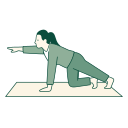
Low-back pain is common and often improves, but no single corrective exercise fits every back. For persistent nonspecific pain, the strongest broad approach is usually to stay active, gradually restore meaningful movement, use exercise that suits you, and address sleep, work demands, stress, and fear when they play a part.
Pain doesn't automatically mean the back is being damaged, though new or changing symptoms can need assessment. Start by naming what you want back: walking, lifting, sitting through work, sleeping, gardening, or a return to training.
What to do
- Keep ordinary activity going at a tolerable level rather than resting in bed.
- Walk regularly, starting with durations that don't cause a big, lasting flare.
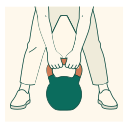
- Practice comfortable bending, hip hinging, and trunk movement instead of guarding forever.
- Strengthen the legs, hips, back, and trunk two or three times a week.
- Break up long spells of sitting or standing, and ease work demands for now.
- Use education, heat, manual therapy, or medication as supports when appropriate; rebuilding function stays central.
The World Health Organization guideline for chronic primary low-back pain supports a person-centered mix of education, exercise, and selected physical or psychological care, and advises against several common passive or harmful approaches as routine care. The best exercise is often the one you can do, progress, and tie to an activity that matters.
A simple plan
For two weeks, walk 10 to 20 minutes most days, in one go or in shorter bouts. Three days a week, do five gentle pelvic or trunk movements, eight chair squats, eight hip hinges with hands on the thighs, six bird dogs per side, and a short carry, within a range that feels manageable.
Pick one limited activity and practice it below the flare threshold. If sitting gets hard after 30 minutes, change position at 20. If lifting is the goal, start with a light object from a raised surface, then lower the surface or add weight gradually.
Let the next-day response guide progression. Mild, temporary discomfort is fine if it settles and function keeps improving. Add reps, range, or load slowly, and cut the dose if symptoms escalate and stay higher for more than a day or two.
How to know it is working
Track function first: walking time, sitting tolerance, sleep disruption, lifting capacity, and confidence. Pain intensity may fluctuate while function improves; a good week means more normal activity with manageable symptoms, not necessarily a pain-free day.
Review once a week. Frequent checking and repeated movement tests keep attention locked on the back. Note leg symptoms separately, since pain, numbness, or weakness traveling below the back may change the plan.
If you get stuck
If every exercise flares symptoms, reduce range and total dose and build from something tolerable, like walking or supported movement. If fear is the barrier, graded exposure with a physical therapist can rebuild confidence. If sleep, mood, or work stress tracks the pain closely, get support for those too, without implying the pain is "just stress."
Persistent symptoms may need a structured assessment and a broader plan. Routine imaging is often unhelpful for nonspecific pain, but a clinician can decide when the history or exam makes it appropriate.