Reduce Back Pain During Pregnancy
Make pregnancy back pain less disruptive with activity, strength, positioning, better lifting, and physical therapy when it persists.
 Ask Murph to help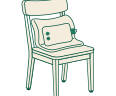
What to do
- Keep walking or use another low-impact activity. Short walks, swimming, or water exercise can reduce stiffness and preserve strength. Split activity into ten-minute blocks when one longer session increases pain.
- Change positions before discomfort peaks. Alternate sitting, standing, and walking. Use a small lumbar support when sitting and put one foot on a low stool during long stretches of standing.
- Improve lifting mechanics. Bring the object close, bend the knees and hips, exhale through the effort, and don't twist while holding a load. Split groceries or laundry into smaller carries.
- Strengthen the support system. Sit-to-stands, supported squats, rows, hip hinges with light resistance, bird-dog variations, and side-hip work can help when they feel comfortable. Progress gradually.
- Use sleep support. Side sleeping with a pillow between the knees and another under the abdomen can reduce strain. A full-body pillow is optional; ordinary pillows give the same support.
- Try heat or cold. Use a low setting and protect the skin. Heat should feel comfortably warm, not raise your whole-body temperature.
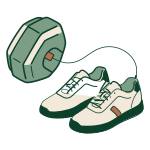
- Choose supportive footwear. A stable, comfortable shoe can reduce strain during walking and standing. There is no universally correct heel height or insert.
- Consider a support belt selectively. Some people get short-term relief during standing or walking. It should support activity, not replace muscle use all day.
- Use physical therapy for persistent pain. A pregnancy-informed therapist can assess pelvic girdle pain, movement, strength, work demands, and pelvic-floor symptoms and give you specific modifications.
A simple plan
For two weeks, take two or three 10-minute walks most days. On three days each week, do two rounds of eight sit-to-stands, eight supported hip hinges, ten band rows, and six controlled bird-dog or standing opposite-arm-and-leg repetitions per side. Keep discomfort mild and stop any movement that produces sharp or radiating pain.
Set a timer to change position every 30 to 60 minutes during long sitting or standing. Use heat for 15 to 20 minutes when it helps, and set up side-sleep support before bedtime. Record only pain from 0 to 10 and one activity that got easier or harder.
How to know it is working
If you get stuck
Reduce range or load before stopping all movement. A raised sit-to-stand may beat a deep squat, and a shorter walk may beat bed rest. If pain sits near the pubic joint or sacroiliac area, single-leg tasks and wide steps may need modifying. A therapist can tell pelvic girdle symptoms apart from ordinary muscular back pain.
Pain that radiates below the knee with numbness or weakness, pain that doesn't ease with position, or pain alongside urinary or obstetric symptoms needs a broader assessment. Don't repeatedly stretch an irritated nerve or joint into pain.