Understand My Fracture Risk
Understand fracture risk factors, bone health assessments, and questions for your care team.
 Ask Murph to help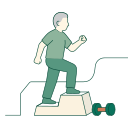
Fractures happen when weak bone meets the force of a fall, so prevention has two equally important sides: strengthen and treat the skeleton, and reduce the chance or severity of falls. A DXA scan helps estimate bone density, but age, prior fractures, steroid exposure, falls, family history, and other conditions can matter just as much.
A prior hip or vertebral fragility fracture is a major warning even if the bone-density report is not in the osteoporosis range. For people at high risk, medication is often the most powerful way to reduce fracture probability. Exercise, calcium, vitamin D, and home safety back up that treatment rather than replace it.
What to do
- Get screened when appropriate. Current U.S. guidance recommends osteoporosis screening for women 65 and older and for younger postmenopausal women at increased risk. Others may need evaluation because of fractures, steroids, low weight, or medical conditions.
- Treat osteoporosis when benefit is meaningful. Bisphosphonates, denosumab, bone-building medicines, and other options fit different risk levels. Administration, duration, and transitions matter; some medicines should not be stopped without a follow-on plan.
- Strength train. Work legs, hips, back, and grip two or three times a week. Stronger muscles improve both bone loading and your ability to catch or control a stumble.
- Practice balance. Tai chi, single-leg work near support, step drills, and physical therapy can reduce fall risk when progressed appropriately.
- Make the home easier to move through. Improve lighting, secure loose rugs and cords, add stair rails or grab bars where needed, and keep frequently used items within reach.
- Review vision, feet, and medicines. Poor vision, neuropathy, sedatives, blood-pressure drops, and unsuitable footwear are common modifiable risks.
- Meet calcium, vitamin D, protein, and energy needs. Correct deficiencies without megadosing. Muscle loss from under-eating can increase falls even when the diet seems “clean.”
- Avoid smoking and heavy alcohol. Both affect bone; alcohol and sedating substances also increase falls.
A simple plan
Build a risk snapshot: prior fractures and falls, DXA and fracture-risk estimate if available, medicines including steroids and sedatives, vision, balance, footwear, home hazards, calcium and protein intake, vitamin D status when relevant, and current bone medication.
For 12 weeks, do two supervised or well-designed strength sessions, three five-minute balance sessions, and one home-safety pass. Book any overdue vision or medication review. Make prescribed osteoporosis treatment and calcium-rich foods part of stable routines.
If you fall, log where, why, footwear, dizziness, and injury. The point is to find a pattern, not to assign blame.
How to know it is working
What to expect
Balance and strength can improve within weeks, while fracture reduction from bone treatment and remodeling develops over months. Risk never reaches zero. A person can fracture with a “better” DXA, and someone with low density may avoid fractures through treatment and fall prevention.
Reassess after any fall, not just after a fracture. A near-fall may expose an unsafe step, a nighttime bathroom route, new dizziness, or declining foot sensation while there is still time to act. Also revisit the plan after a new sedating medicine, vision change, hospitalization, or long stretch of inactivity. A short review after each of these beats a checklist completed once.