Understand Heart Disease Prevention
Learn about heart disease risk factors, everyday habits, and prevention options to discuss with your clinician.
 Ask Murph to help
Heart-disease risk comes down to how many important risks you carry, and for how long. Tobacco, high blood pressure, high LDL or ApoB, diabetes, low activity, poor diet, too little sleep, kidney disease, and family history do not all weigh the same for every person. A strong plan finds your largest modifiable risks and puts most of the effort there.
Risk estimates are useful starting points, not guarantees. They help decide whether lifestyle alone is enough, whether medication is likely to give meaningful benefit, and whether a test such as coronary artery calcium would resolve uncertainty. Interpret them with a clinician when the decision is consequential.
What to do
- Avoid tobacco and nicotine exposure. If you smoke, quitting is often the highest-value step. Use counseling and approved medication rather than willpower alone.
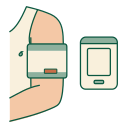
- Control blood pressure. Use a validated home cuff and average several well-taken readings. Work on food, sodium, activity, alcohol, sleep, weight, and medication adherence as relevant.
- Lower atherogenic cholesterol. Replace saturated fat with unsaturated fat, eat soluble fiber, and use statin or non-statin treatment when your risk supports it.
- Prevent or manage diabetes. Regular activity, an eating pattern you can keep, weight loss when appropriate, and prescribed therapy reduce more than the glucose number.
- Build fitness and strength. Work toward regular moderate aerobic activity plus strength training twice a week, adjusted to your current ability.
- Eat a cardiovascular pattern. Center vegetables, fruit, legumes, whole grains, nuts, fish, and unsaturated oils. Keep the ultra-processed foods that displace them to a minimum.
- Protect sleep and recovery. Aim for enough regular sleep, and get loud snoring, gasping, or marked daytime sleepiness evaluated.
- Use preventive care. Review family history, kidney function, Lp(a), vaccinations, and age-appropriate screening rather than ordering every available test.
A simple plan
Create a baseline dashboard with five items: tobacco status, home blood-pressure average, LDL or ApoB, diabetes status or A1C, and weekly activity. Add family history and any known kidney or cardiovascular disease. Ask which one or two factors account for most of your modifiable risk.
Run a 12-week plan around those priorities. Someone who smokes and has high blood pressure should put far more effort into a supported quit attempt and blood-pressure treatment than into a minor supplement. Someone with very high LDL may need medication plus dietary changes even if they exercise regularly.
Schedule the follow-up before motivation fades. Repeat the measurements that should change and base the next treatment decision on evidence.
How to know it is working
What to expect
Some numbers improve in weeks; real risk reduction builds across years. You may feel no different when LDL or blood pressure improves; prevention often works silently. Genetics and age remain, but controlling modifiable risks still changes the odds. A healthy lifestyle does not guarantee protection, and needing medication does not mean lifestyle failed.
Review the dashboard after major life or health changes and at routine preventive visits, not every day. A new pregnancy, menopause, diabetes diagnosis, kidney disease, smoking relapse, or strong new family-history detail can change priorities. Otherwise, let the stable plan work in the background.