Sleep Better on Night Shifts
Protect a main sleep period and use light, naps, and caffeine deliberately around overnight work.
 Ask Murph to help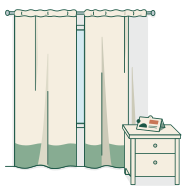
What to do
- Choose a main sleep block after the shift and defend it like an appointment. Household noise, calls, deliveries, and errands need a plan before you get home.
- Make the room dark, quiet, and cool: blackout curtains or an eye mask, notifications silenced, and housemates told when you're unavailable.
- Use bright light early in the shift when it helps alertness. Wear ordinary sunglasses on the trip home when safe, then keep the bedroom dark.
- Use caffeine early enough to help at work and stop several hours before planned sleep. The exact cutoff depends on your sensitivity and shift length.
- Consider a planned nap before the shift. A short nap can improve alertness; a longer one may help before an extended night if there's time for grogginess to clear.
- Eat and move to support the shift without making the biological night a string of heavy meals.
A simple plan
For the next run of nights, map four times: the pre-shift nap, the start of caffeine, the caffeine cutoff, and the main sleep block. Keep them as stable as work allows. After the shift, run a short repeatable sequence (small meal if needed, wash up, dark room, phone silenced) so errands don't eat the sleep window.
If the main block is short, add a nap. On days off, decide whether to stay partly delayed or switch back based on how many nights you work in a row and how long the break lasts. Frequent full reversals can add circadian disruption.
Ask your household and employer for concrete help: protected quiet hours, predictable scheduling, reasonable shift length, and authorized breaks. Shift-work sleep is partly a work-design problem, not just a personal habit.
How to know it is working
Track total sleep across 24 hours, alertness during the hardest part of the shift, and sleepiness on the drive home. A more predictable main sleep block is progress, even if daytime sleep stays lighter than night sleep.
Don't grade the plan by a wearable's sleep-stage percentages. Daytime sleep can be scored differently, and safety and total restorative opportunity matter more.
If you get stuck
If the room is good but sleep is still short, check caffeine timing, bright morning light, errands, childcare, and whether you're trying to switch schedules every day. On permanent nights, partial circadian adaptation may be possible. On rapidly rotating shifts, full adaptation usually isn't realistic, so focus on protected sleep and fatigue management.
Persistent insomnia or excessive sleepiness tied to the schedule may be shift work disorder. A sleep clinician can help with timed light, melatonin, and prescription options when appropriate.