Unwind After Work
Create a reliable transition that helps the workday end in your attention as well as on the clock.
 Ask Murph to help
Unwinding is the shift from work readiness to personal life. A good transition stops your attention rehearsing tasks, lets physical arousal fall, and makes you available for food, relationships, movement, hobbies, or rest.
The common mistake is letting exhaustion end the day. Scrolling, drinking, or watching something can numb the first hour without resolving unfinished work or changing the body's pace. None of those is automatically bad, but if you come out more wired, later, or less present, it is not doing the job.
What to do
- Close open loops. Before you stop, write what remains, the next action, and when you will return to it.
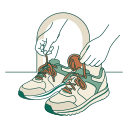
- Mark the transition physically. Walk, change clothes, shower, stretch, or take a different route home. Remote work especially needs a visible end.
- Lower stimulation gradually. Go from demanding work to a simple physical or social activity, not straight into another feed of alerts and decisions.
- Choose restoration by state. Mentally tired but physically restless: move. Overstimulated: choose quiet. Isolated: contact someone. Emotionally loaded: write or talk before you try to distract yourself.
- Set after-hours rules. Decide whether work messages are off, batched once, or reachable only through a defined emergency channel.
- Keep alcohol honest. Alcohol can feel relaxing while making sleep and next-day recovery worse. If it is your only reliable "off switch," build another transition and look at the pattern.
- Protect a low-demand first block. Fifteen to thirty minutes may be enough.
A simple plan
For two weeks, use a three-step transition on at least four workdays:
- Close: spend five minutes recording unfinished tasks and tomorrow's first action.
- Change state: do ten to twenty minutes of walking, light movement, showering, music, or another repeatable physical cue.
- Enter life: take one deliberate evening action. Start dinner, greet the family without the phone, sit outside, or begin a hobby.
Put work devices and materials out of sight after the close step. If your role requires availability, write the rule down: who can contact you, by what channel, for what kind of issue.
After the transition, rate two things from 0 to 10: how mentally attached to work you still feel and how available you feel for the evening. Note any factor that dominated, such as conflict, a late meeting, an unfinished decision, the commute, or alcohol. Review once a week.
If a step is not helping, change the state match. Someone who sat all day may need movement; a nurse after an overstimulating shift may need quiet; someone who works alone may need company.
How to know it is working
You will not feel perfectly calm at 5:01 p.m. Look instead for fewer work checks, less replaying of conversations, a shorter gap before your attention comes home, more patience with other people, and an easier bedtime.
Compare typical workdays after two or three weeks. If detachment improves but the workload is still excessive, keep the transition and address the work design. No routine can make up indefinitely for a job that never stops.
If you get stuck
If your mind keeps rehearsing one unresolved issue, write down the decision or question it needs and schedule when you will handle it. If work intrudes because others expect instant replies, clarify your availability rather than resisting silently. If home responsibilities start the moment you walk in, even a five-minute close and a one-song transition can mark a boundary.
A persistent inability to switch off can go with burnout, anxiety, trauma exposure, moral injury, or an unsafe workplace. Support from a supervisor, peer, occupational service, or mental health professional may be more useful than another relaxation technique.