Build Bigger Arms
Grow your biceps and triceps with direct work, progressive training, and enough recovery.
 Ask Murph to help
Bigger arms mean growing the elbow flexors, mostly the biceps, and the extensors, mainly the triceps. Rows, pull-ups, presses, and push-ups already train them. Direct curls and extensions add focused work without turning every compound lift into an arm test.
Pick exercises that feel stable, work through a comfortable range, and can be progressed. The triceps make up a large share of upper-arm mass, so a curls-only program leaves much of the opportunity untouched.
What to do
- Train biceps and triceps two or three times a week.
- Count hard pulling and pressing sets as some arm work, then add direct sets as recovery allows.
- Start with about 6 to 10 hard weekly sets per muscle group, including indirect work.
- Use at least one curl and one triceps movement that feels comfortable at the wrist and elbow.
- Keep the upper arm fairly still so the target muscle moves the load instead of momentum.
- Add reps within a range before adding weight.
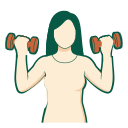
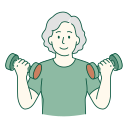
Don't chase a perfect angle. A standing curl plus a cable or dumbbell curl with the arm slightly behind the body covers the biceps. A pressdown and an overhead extension cover the triceps in two positions. Consistency beats collecting variations.
A simple plan
Add arm work to two upper-body or full-body sessions. On day one, do a dumbbell or cable curl and a pressdown for two or three sets of 8 to 15 reps. On day two, do a hammer curl and an overhead cable or dumbbell extension in the same range. Keep one to three good reps in reserve on most sets.
When every set reaches 15 clean reps, add the smallest resistance you can and return to 8 to 10. If the next dumbbell jump is large, add reps more slowly, use a cable stack, or slow the lowering phase. Don't turn the exercise into a full-body swing to claim a heavier load.
Run the plan for eight weeks. If performance is improving and your elbows feel normal, keep it. If the arms recover easily but nothing moves for several weeks, add one set per muscle each training day. If elbows stay sore or pressing and pulling numbers fall, remove sets first.
How to know it is working
Track the same curl and extension under similar conditions. More controlled reps or more resistance is an early sign. For size, measure the same point on the relaxed or flexed arm every four weeks at a similar time of day, or take photos with the same lighting and position.
Arm circumference shifts with hydration, carbs, inflammation, and the pump from training, so don't measure right after a workout and call it growth. Look for a trend over two or three months. Visible change usually lags strength.
If you get stuck
Make sure the direct sets are actually hard. Isolation exercises can feel uncomfortable before the muscle is near its limit, so use controlled technique and a load that makes the last reps demanding. Don't go to failure every set, though; it adds fatigue and may irritate the elbows without adding much.
If biceps lag, move curls earlier in one session. If triceps lag, put an extension before pressing on another day. Check whether a calorie deficit, inconsistent protein, or poor sleep is limiting muscle gain overall. Arm size also depends on frame and genetics; training changes what you build, not bone structure or where the muscle attaches.