Complete My First Triathlon
Prepare to swim, bike, and run in one event with simple discipline-specific training, transition practice, and a finish-first pace.
 Ask Murph to help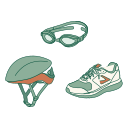
Your first triathlon is a completion and logistics goal before it is a speed goal. Pick the event, learn its exact swim, bike, and run distances, then train each discipline often enough that none feels unfamiliar. Most beginners choose a sprint-distance event, but distances and course conditions vary.
You don't need three hard workouts. You need a manageable week, basic pool or open-water competence, safe bike handling, and one or two rehearsals of moving from bike to run.
What to do
- Read the organizer's course, rules, cutoffs, swim conditions, transition setup, and equipment requirements.
- Practice each discipline at least weekly. Two short sessions in your weakest one can help.
- Keep most training easy and build duration gradually.
- Learn to swim continuously and calmly before counting on event adrenaline.
- Make sure the bike fits, works reliably, and handles safely around others.
- Add short "brick" sessions: an easy run right after a ride.
- Rehearse the exact order of shoes, helmet, number, and equipment.
A simple plan
Use eight to twelve weeks from a basic fitness base. A simple week has two swims, two rides, and two run or run-walk sessions; several can be short and one combined. Keep at least one rest day.
Build the longest swim toward or beyond the event distance with repeats and controlled continuous work. Extend one ride until it exceeds your expected bike time. Build one easy run toward the run distance; it doesn't have to follow every ride.
Every one or two weeks, finish an easy ride with ten to 20 minutes of very easy running. Practice transitions several times: helmet fastened before you move the bike, equipment laid out clearly, nothing new.
In the final two weeks, do a short rehearsal of all three disciplines at reduced distance, then reduce volume. On event day, start the swim calmly, ride below your standalone bike effort, and start the run slower than your standalone run pace.
How to know it is working
Each discipline becomes familiar, the bike-to-run transition stops feeling alarming, and equipment choices become automatic. You can complete course-sized training time without excessive recovery, even if no single workout reproduces the whole event.
Readiness also means knowing what you'll wear, carry, eat or drink, and do in transition. The plan has worked when you reach the start healthy, get through every discipline safely, and finish within the rules.
If you get stuck
If swimming is the barrier, put lessons and supervised practice ahead of more fitness elsewhere. If running causes impact pain, keep cycling and swimming while you adjust the run progression.
If open water causes panic, practice gradually with a supervised group and a clear exit. Never make race morning your first open-water experience.
If six sessions sound impossible, think in touchpoints, not hour-long workouts. A 20-minute technique swim, a short easy run, or a ten-minute brick keeps the frequency up. Protect the few longer course-specific sessions and keep the rest proportionate.