Stay Strong During Pregnancy
Maintain useful strength through pregnancy with controlled full-body training, gradual modifications, and enough recovery for a changing body.
 Ask Murph to help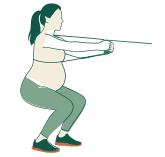
What to do
- Train the main movement patterns. Use a squat or sit-to-stand, hip hinge, row, supported push, step or split squat, carry, calf raise, and trunk-stability exercise. Machines, dumbbells, bands, and bodyweight all work.
- Keep the effort submaximal. Pick loads you can move with steady technique while breathing continuously. Finish most sets with two to four comfortable repetitions in reserve. Avoid grinding repetitions and routine maximal testing.
- Exhale through the effort. Brief natural bracing happens when you lift, but prolonged breath-holding and straining are unnecessary here. Reduce the load if you cannot breathe and control the movement.
- Change positions for comfort. A wider stance, raised deadlift, box squat, incline push-up, supported split squat, or seated row may fit better as the belly grows. Change prolonged flat-on-the-back work later in pregnancy if it causes dizziness, nausea, or discomfort.
- Watch the pelvic floor and abdominal wall. Heaviness, leaking, pelvic pain, or pronounced abdominal bulging are reasons to reduce load, range, or impact and consider pelvic-health support. They are feedback, not evidence that all lifting is unsafe.
- Allow more recovery. Sleep, nausea, heat, and joint changes can alter performance. Keep two or three days between hard full-body sessions and scale volume before abandoning the routine.
- Preserve movement skill. A lighter load moved well can maintain strength and coordination. Pregnancy does not require adding weight every week.
A simple plan
For six weeks, do two 30- to 40-minute sessions on nonconsecutive days. Start with five movements: box squat, dumbbell or kettlebell deadlift from an elevated surface, supported row, incline push-up or machine press, and farmer carry. Do two sets of 6 to 12 controlled repetitions at a load that feels moderate.
If time and symptoms allow, add a step-up or split squat and a comfortable side plank or anti-rotation exercise. When all sets feel smooth for two sessions, add one or two repetitions or the smallest load increase. If fatigue or symptoms rise, drop a set or use an easier variation that week.
How to know it is working
If you get stuck
Simplify. A short circuit of sit-to-stands, rows, incline push-ups, and carries can preserve the habit. If pelvic pain appears, shorten stance, range, or load and try supported variations. If abdominal doming is pronounced, reduce pressure and pick a movement you can control rather than repeatedly checking the midline in the mirror.
Online rules that forbid all squats, all overhead work, or all lifting above an arbitrary weight are too broad. At the other extreme, prior fitness does not make warning symptoms irrelevant. Use experience, current symptoms, and obstetric guidance together.