
Loading dashboard
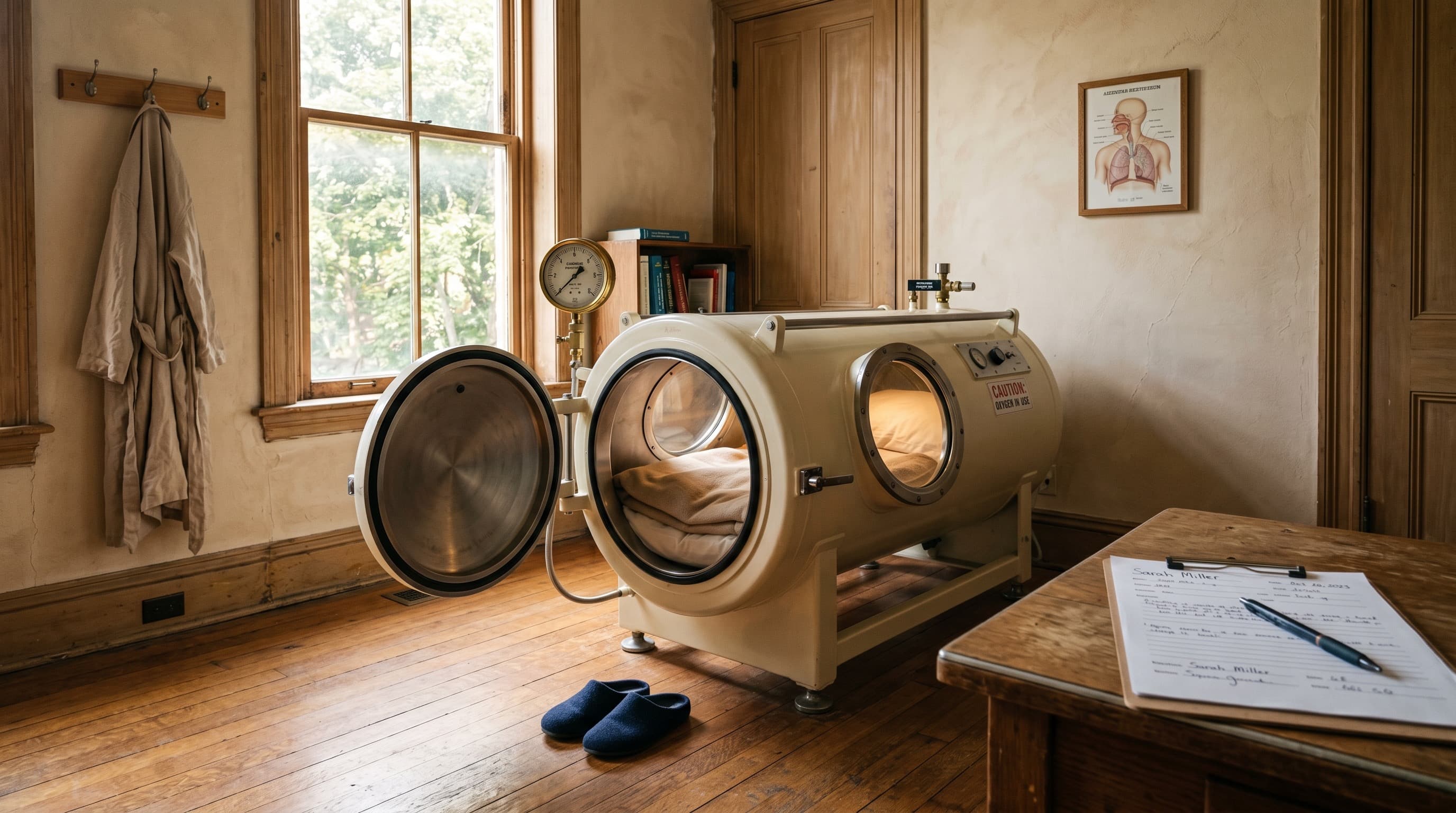
Breathing pure oxygen in a pressurized chamber, where the pressure dissolves extra oxygen directly into blood plasma to reach tissue that normal circulation may not supply enough.
Pressurized oxygen tightens blood vessels during and after treatment, raising vascular resistance and blood pressure in susceptible users.
moderate evidence
Repeated hyperoxia under pressure pushes extra oxygen into plasma and changes vascular and cardiac perfusion during the course.
limited evidence
chamber session
Start only with an active clinician-prescribed HBOT plan at a medically supervised facility.
Confirm indication chamber type, pressure units, oxygen method, session length, air breaks, course length, and supervising clinician.
Complete facility safety screen; disclose lung ear/sinus, seizure, diabetes, pregnancy, ocular gas, device, medication, and anxiety context.
Follow facility rules for clothing electronics, personal items, grounding, device compatibility, monitoring, equalization, and staff instructions.
Tell staff immediately about ear/sinus pain dizziness, pulmonary, chest, neurologic, visual, anxiety, glucose, BP, or device symptoms.
After each session log pressure, minutes, air breaks, symptoms, adverse events, glucose/BP checks, vision/ear changes, and modifications.
Keep mild chambers topical oxygen, normobaric oxygen, EWOT, athletic oxygen, and wellness programs in separate logs.
To keep results clean
Bring the facility prescription: indication, ATA, oxygen method, duration, air breaks, frequency, total sessions.
Arrive with empty pockets: no electronics, lighters, batteries, oils, synthetics, heat packs, or unapproved devices.
Equalize early and often; tell staff before ear pressure becomes pain.
After each session log actual ATA, minutes, air breaks, shortened time, staff interventions, and symptoms.
Skip hard training sauna, flights, alcohol, and long travel around treatment days unless the care team approves.
Do not compare wellness chambers topical oxygen, or EWOT against a prescribed systemic HBOT course.
Anything unclear during the protocol? Ask Murph — your plan, baseline, and tracked signals are already loaded.
HBOT raises pressure while oxygen fraction stays high. Hemoglobin is already near full; the extra dose comes from oxygen dissolving directly into plasma.
Higher plasma oxygen steepens the diffusion gradient into tissue. That matters most where ordinary delivery is limited, injured, or clinically targeted.
Repeated sessions create intermittent hyperoxia, vascular constriction, and perfusion shifts. Blood pressure, glucose, ear pressure, and symptoms track safety; disease outcomes need clinician-defined endpoints.
Clinician-prescribed chamber · pressure + 100% oxygen
Plasma oxygen rises; tissue oxygen gradient increases
Hyperoxia · air breaks · vasoconstriction · perfusion shifts
Oxygen delivery changes · vascular signaling shifts · tolerance guides safety