Do My First Dip
Build the pressing strength and shoulder control needed for one stable parallel-bar dip.
 Ask Murph to help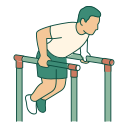
A parallel-bar dip means supporting your full body weight, lowering between the bars, and pressing back to locked elbows. It takes chest and triceps strength plus a shoulder position that stays stable under load. Build it with assisted dips and general pressing, not by repeatedly sinking into a range you can't control.
Bench dips aren't a required step, and the hands fixed behind the body can feel uncomfortable. An assisted-dip machine, band, or foot-supported parallel-bar setup matches the final skill more closely and lets assistance shrink gradually.
What to do
- Train the dip pattern twice a week with at least two days between hard sessions.
- Use assistance that allows 4 to 8 controlled reps.
- Start from stable support, lower only as far as the shoulders stay comfortable, and press without bouncing.
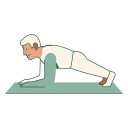
- Build general pressing strength with push-ups, bench press, or a machine press.
- Add modest triceps work and plenty of rows or pulldowns.
- Add range before removing large amounts of assistance.
There is no universal depth. Upper arm parallel to the floor is a useful reference, but anatomy, bar width, and shoulder history matter. Aim for a repeatable dip through a comfortable range rather than forcing the shoulders far below the bars for credibility.
A simple plan
Twice a week, do three sets of 4 to 8 assisted dips, stopping with about two good reps in reserve. Follow with two sets of push-ups or a chest press, two sets of rows, and two sets of triceps extensions.
When all dip sets reach eight reps at the same depth, reduce assistance by one small step. With foot support, put only enough weight through the feet to keep the movement smooth, then gradually use less. A band works too, but record which band and how it is attached.
Once you can do several reps with low assistance, practice a single unassisted lowering: start at the top, take three seconds to descend to your chosen depth, put the feet down, and reset. Try a full unassisted dip every two weeks when rested.
Practice the entry and exit too. Step or jump to the support position only when the setup allows a controlled start, and use a box or platform to get back to the floor safely. Rings demand far more stability; build a strong ring support and assisted ring dip separately instead of assuming parallel-bar strength transfers right away.
If the goal is a straight-bar dip for a muscle-up, add that bar position once a general base is built. Its balance and torso path differ from parallel bars.
How to know it is working
Track assistance, depth, and reps. Less counterweight, a lighter band, less foot pressure, a longer controlled lowering, or a stronger support hold are all progress. Keep bar width and range similar when comparing sessions.
Shoulder comfort matters as much as performance. A plan that reduces assistance while front-of-shoulder pain steadily grows is not working. Use a range that can expand gradually instead of treating discomfort as a mobility challenge.
If you get stuck
If support at the top feels unstable, practice short support holds and build shoulder-blade control with rows and carries. If the bottom is weak, use assisted reps with a brief pause at a comfortable depth. If lockout fails, add focused triceps work.
Review total pressing volume. Bench press, overhead press, push-ups, and dips compete for recovery. If dips are the priority, put them first on one day and cut redundant pressing. If the bar width or fixed hand position stays uncomfortable, another pressing goal may suit your shoulders better.