
Loading dashboard
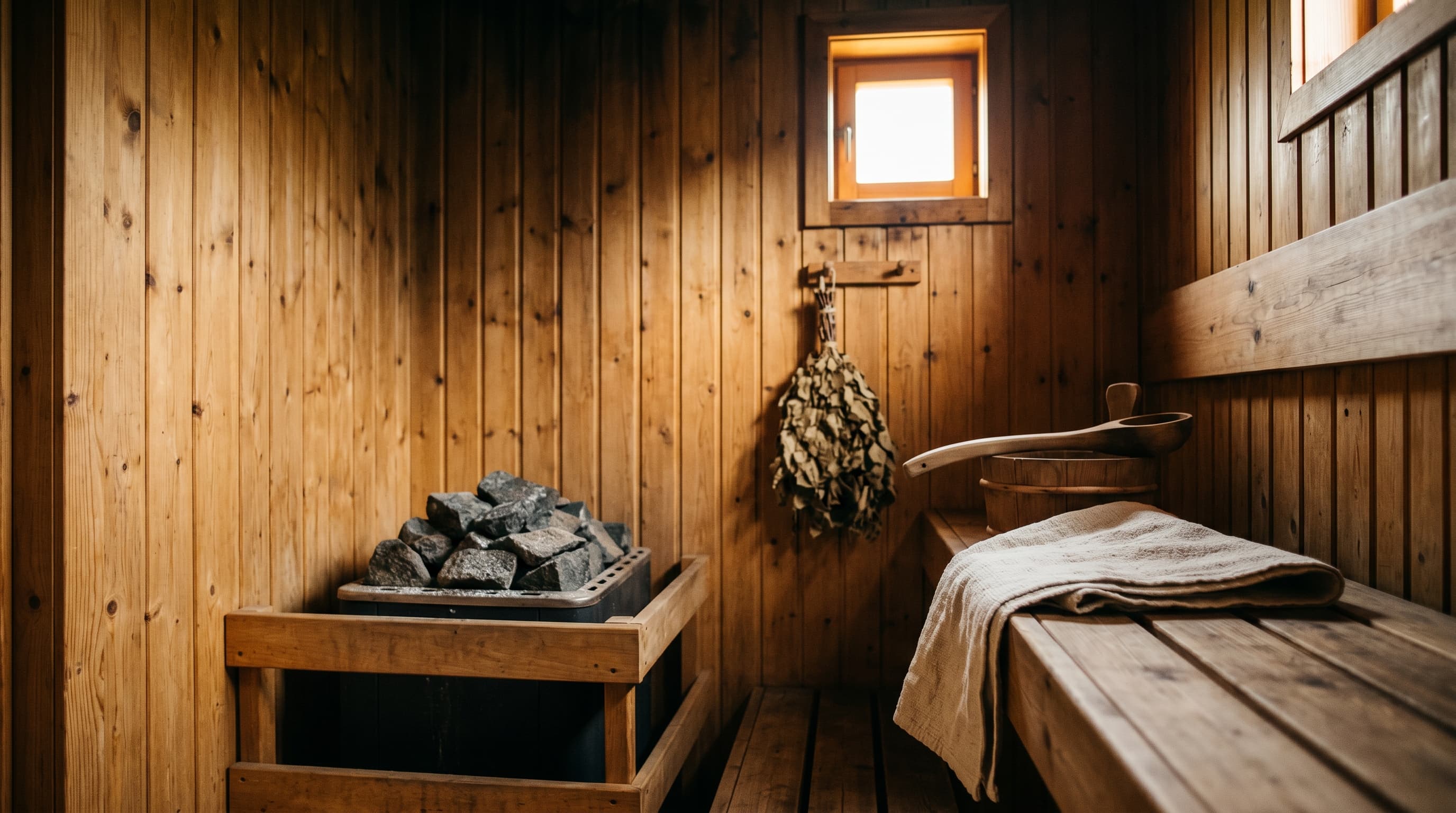
Traditional dry sauna at steady, tolerable heat, where the body opens blood vessels near the skin and the heart pumps harder to move heat out while defending core temperature.
Heat opens skin blood vessels and lowers vascular resistance, training morning vessel tone to relax after repeated tolerable sessions.
limited evidence
Sauna raises heart rate during heat exposure; repeat tolerance lowers resting strain after recovery.
limited evidence
settle
sauna 80–100 °C
cool-down
Pick a traditional dry sauna with safe ventilation temperature control, timer, and easy exit; schedule cooldown time afterward.
Start normally hydrated; avoid sauna after alcohol or recreational drugs; do not force large water or electrolyte doses.
Use 5–10 min as first-session tolerance check; use 15–20 min later only when tolerated.
Sit near the exit lower bench when new; do not chase extreme discomfort, sweat, or core temperature.
Leave immediately for any stop condition; early exit counts as valid data, not failure.
Cool down gently before driving exercise, hot showers, cold plunges, or bed; resume only fully alert and steady.
Log dose context, cooldown method, and symptoms the same day.
To keep results clean
Start lower: 5–10 minutes, lower bench, easy exit. Add minutes only after easy sessions.
Keep modality clean: traditional dry sauna only. Log heavy steam from water on rocks, unusual humidity, or hotter rooms.
Arrive normally hydrated. Skip alcohol, recreational drugs, dehydration, fever, vomiting, diarrhea, or brutal training days.
No catch-up heat: never stack sessions, raise temperature, or extend duration to make up misses.
Cool down gently before driving exercise, hot showers, cold plunges, or bed.
Shared sauna: towel barrier, clear exit, working ventilation. Leave if hygiene or setup feels off.
Anything unclear during the protocol? Ask Murph — your plan, baseline, and tracked signals are already loaded.
Dry sauna loads the body without muscle work. Skin vessels open; sweat carries heat out; heart rate rises; blood shifts outward. The stress is circulation and thermoregulation, not fitness effort.
5–20 min works because heat stress needs an exit. Gentle cooldown restores pressure, temperature, fluid balance, and alertness; rushing into driving, exercise, cold plunge, or bed turns heat into strain.
Across sessions, the body gets faster at dumping heat: earlier sweating, easier skin blood flow, steadier pressure. Resting HR plus morning BP track whether baseline strain drops.
Sauna is not a sedative. The useful sleep mechanism is the warm-to-cool transition after a tolerable session; late, extreme, or dehydrating heat keeps arousal high.
3x/week dry heat · 5–20 min · tolerable cooldown
Skin vessels open; heart rate rises; sweat carries heat out
Cooldown restores pressure, temperature, fluid balance, and alertness
Earlier sweating · steadier vascular tone · lower resting strain