Feel Less Stiff
Reduce everyday stiffness with regular movement, targeted mobility, and strength through comfortable ranges.
 Ask Murph to help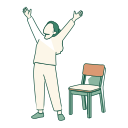
Stiffness is a feeling more than a measurement of tissue length. It often eases after you warm up, change position, sleep better, or move more regularly. The plan that usually works is frequent movement plus targeted strength and mobility, not one punishing stretch session.
Notice when stiffness shows up. Morning stiffness, stiffness after long sitting, and stiffness after a hard workout may each need a different fix. Pin down which regions and activities are limited.
What to do
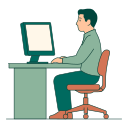
- Break up long sitting or standing with two to five minutes of movement every hour or two.
- Use a short morning or workday sequence for restricted areas.
- Strength-train through comfortable ranges two or three times a week.
- Walk regularly; whole-body movement often changes stiffness more than isolated stretching.
- Use static stretches when a specific range is limited and the stretch feels relieving.
- Adjust training load, sleep, and recovery when stiffness keeps following unusually hard sessions.
Stretch training increases range of motion, and loaded full-range movements can too. Neither needs to be extreme. You want a body that warms up quickly and uses the range you need, not the biggest flexibility score.
A simple plan
For two weeks, do a five-minute sequence at the time stiffness is worst. Walk for one minute, then do five controlled chair squats, five hip hinges, five gentle upper-back rotations per side, and ten ankle rocks. Add one 20- to 30-second stretch for the area that stays most restricted.
During the day, tie a movement break to an existing cue, like refilling water or ending a meeting. Twice a week, do a basic strength session with a squat, hinge, push, pull, and carry through comfortable ranges.
Rate stiffness from zero to ten before the sequence and ten minutes after. If one movement helps every time, keep it. If a stretch irritates you or does nothing after two weeks, swap it out rather than making it longer and harder.
Morning stiffness may respond to a warm shower, light, and a few easy reps before harder exercise. Workday stiffness often responds better to changing position earlier, before discomfort builds. Post-training stiffness calls for reviewing the training dose and recovery, not an extra hard workout.
Hydration and supplements are rarely the whole story; sort out sleep, regular movement, and a gradually rising training load before building a complicated recovery stack.
How to know it is working
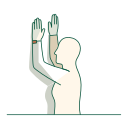
Track how long stiffness lasts and how much it interferes, not just how intense it is. Good signs include needing less time to loosen up, moving normally sooner in the morning, standing after work without hesitating, or squatting or reaching overhead more comfortably.
A range photo can help, but stiffness can improve without a big range change. Look at weekly averages, because sleep, weather, training, and illness create day-to-day noise.
If you get stuck
If stiffness returns after every long sedentary block, more frequent movement may matter more than a longer evening routine. If it follows training, reduce the sudden jump in volume and build gradually. If one joint feels blocked rather than generally tight, forcing it may not help.
Persistent widespread stiffness can also come from arthritis, inflammatory conditions, medication effects, or other health issues. Long-lasting morning stiffness, swollen joints, fever, unexplained fatigue, or a major recent change deserves proper evaluation.