Improve My Mobility
Build the usable range of motion needed for the movements and activities that matter to you.
 Ask Murph to help
Mobility is range of motion you can actually use, not just range someone can push you into. It grows from time spent in that range, strength and control inside it, and practice of the real movement. You don't need every joint at maximum flexibility, just enough range for the life you want.
Start with one concrete restriction: reaching overhead, sitting in a squat, looking over your shoulder, stepping onto a high surface, or touching your toes. General stretching may feel good, but a specific target lets you choose the right work and see progress.
What to do
- Pick one to three movements that matter; don't stretch every joint equally.
- Practice the target range three to five days a week, in short sessions.
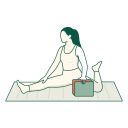
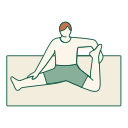
- Use static stretching when tolerance and passive range are the limit.
- Use controlled full-range strength exercises to own the new range.
- Rehearse the real movement right after, while the range is there.
- Add range gradually; never force through pain, numbness, or a feeling of joint instability.
Meta-analyses show chronic stretching increases range of motion, and resistance training through useful ranges can too. So where appropriate, a deep split squat, controlled overhead press, or loaded calf raise can do mobility and strength work in one exercise.
A simple plan
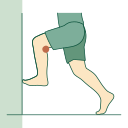
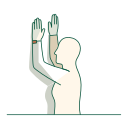
Choose two target movements and record a repeatable starting position. Pair each with one gentle stretch and one strength exercise through the range: a calf stretch and slow split squat for an ankle, a lat or chest stretch and a light overhead reach or press for a shoulder.
Four days a week, do two rounds: hold the stretch 20 to 45 seconds at a strong but tolerable sensation, then do 6 to 10 controlled reps of the strength movement. Finish with two or three reps of the real task. Ten minutes is enough.
Every two weeks, change one thing: slightly more range, a small load, or a more independent version of the movement. Keep normal strength training in the week; new range is more useful when it can produce and absorb force.
How to know it is working
Measure the exact movement with the same stance, footwear, warm-up, and reference point every time. Photos or video show reach, depth, or arm position; pair them with how the movement feels and whether it transfers to the real task.
Range often rises for a while after a warm-up. That's real, but lasting progress means more range available before any elaborate routine, and under your control. Reassess every two to four weeks, not daily.
If you get stuck
If passive range improves but the movement still feels out of reach, add strength and skill work in the new range. If nothing changes, the drill may not target the limiting joint, or balance, fear, pain, or technique may be the real barrier.
Stretching until your body guards or the joint aches tends to cost consistency, so try a different position, shorter hold, or loaded movement instead. Some anatomical limits won't change, and a good alternative technique beats forcing a one-size-fits-all shape.