Improve Ankle Mobility
Build usable ankle range for squatting, walking, stairs, running, and comfortable movement.
 Ask Murph to help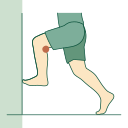
Ankle mobility usually means dorsiflexion: the shin moving forward over the foot while the heel stays down. That range feeds into squats, stairs, walking, running, and landings. A restriction can come from the calf tissues, the joint, an old injury, swelling, or simply not spending time in the position.
Measure the movement that matters before you stretch everything. The knee-to-wall test is a simple option: keep your heel down and move your knee toward a wall over the middle toes. It isn't a diagnosis, but it gives you a repeatable starting point.
What to do
- Practice ankle range three to five days per week in short sessions.
- Use both a straight-knee calf stretch and a bent-knee version.
- Add loaded ankle movement through split squats, calf raises, or controlled step-downs.
- Keep the heel planted and the foot stable; letting the arch collapse inward creates fake range.
- Include strength for both raising the heel and lifting the front of the foot.
- Practice the target task (squat, stair, or run drill) after mobility work.
Stretching can increase range of motion, and so can resistance training through range. Combining both is practical. Aggressive banded joint mobilizations aren't required, especially when a simple calf stretch and loaded movement are already producing progress.
A simple plan
Four days per week, do two rounds per side. Hold a straight-knee calf stretch for 30 seconds, then a bent-knee calf stretch for 30 seconds. Follow with eight slow knee-over-toe rocks and eight calf raises through the fullest comfortable range.
Twice per week, add two sets of split squats or step-downs, letting the knee travel forward while the whole foot stays planted. Use hand support and a small range at first. After the mobility work, do five controlled repetitions of the squat, stair, or other movement you want to improve.
Every two weeks, add a little range or load. If a heel wedge immediately improves the target squat, use it during strength training while you build ankle mobility separately.
Include the foot and calf rather than treating the ankle as a passive hinge. Slow calf raises, controlled lowering from a step, and lifting the toes toward the shin build strength around the range you have. For walking or running, expose the ankle gradually to the relevant speed and surface once basic range improves. A big change on a test does not prepare the tissues for a sudden jump in miles, hills, or court time.
If you normally wear shoes with a raised heel for the target activity, test in those shoes as well as barefoot. Both results are useful, but they answer different questions.
How to know it is working
Use the knee-to-wall test with the same foot position and measure the distance from your toes to the wall. Note whether the heel stays down and the knee tracks over the foot. Test every two to four weeks after the same brief warm-up.
Track transfer too. A better test number matters less if the squat, stairs, or gait haven't changed. Look for easier depth, a smoother step-down, or less early heel rise in the real task.
If you get stuck
If range improves during a session and then disappears, add strength and task practice inside the new range. If the front of the ankle feels blocked or pinched, pushing harder into it may not help; change the angle and consider an assessment. If one side stays very different after an old sprain, you may need strength, balance, and joint-specific rehabilitation.
Foot position can hide the limitation. Retest without letting the arch collapse or the foot turn far outward. Don't demand perfect symmetry either; small differences are common and may not matter when function is good.