Touch My Toes
Improve forward-bend reach with consistent hamstring work, hip control, and gradual practice.
 Ask Murph to help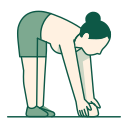
Touching your toes is a simple flexibility skill shaped by the hamstrings, hips, spine, calf tissues, arm length, and how you fold. It improves with regular stretching and full-range strength work. It isn't a universal test of back health, and not being able to do it doesn't mean something is wrong.
Pick a standard: feet together, knees straight but not pushed backward, and a slow forward fold. If you just want to reach your toes, a little spinal rounding is part of the movement. If you want a hip hinge for lifting, that's a different skill and needs separate training.
What to do
- Practice three to five days a week after a short warm-up.
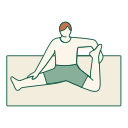
- Stretch the hamstrings in a position where your back stays comfortable.
- Use controlled hinges or Romanian deadlifts to build strength through the range.
- Add calf work if ankle position clearly limits the fold.
- Breathe normally and stop at strong tension, not pain.
- Retest only now and then; spend most of the time training, not checking.
Research shows chronic stretching increases range of motion, and resistance training can improve it too. Combining them is practical: static stretching raises your tolerance to the range, and loaded hinges teach control and strength inside it.
A simple plan
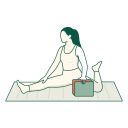
Four days a week, warm up with two minutes of walking. Do two 30-second hamstring stretches per side, using a supine strap stretch or a heel on a low surface. Then do two sets of eight slow hip hinges or light Romanian deadlifts, keeping the load close and stopping at a comfortable range.
Finish with three relaxed forward folds. Bend the knees slightly, put your hands on your thighs or shins, and slowly straighten only until the tension is strong but tolerable. Hold for ten seconds, come up, and repeat. Use less knee bend over time.
Every two weeks, measure fingertip distance from the floor before the routine and after the same warm-up. Progress by adding a little range to the stretch or a light load to the hinge, not by bouncing harder toward your feet.
How to know it is working
Use a ruler or a fixed visual reference and record fingertip-to-floor distance under the same conditions. It measures overall forward-bend reach, not lumbar-spine mobility on its own. Also note whether the movement feels calmer and whether the range is there without a long warm-up.
Daily reach shifts with temperature, recent exercise, and time of day, so review the trend every two to four weeks. Reaching the toes with slightly bent knees is a fair intermediate milestone before your chosen final standard.
If you get stuck
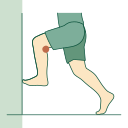
If you feel the stretch mainly behind the knee, with tingling or burning, reduce intensity and change position; neural sensitivity may be involved. If the low back gets irritated, use a supine hamstring stretch and train the hinge separately. If gains keep fading, add strength in the new range instead of only holding longer.
Body proportions matter. Someone with relatively long legs and short arms needs more range than someone built differently. Measure your own progress, not someone else's geometry.